
|
Gaudi Framework, version v21r9 |
| Home | Generated: 3 May 2010 |
|
|
Gaudi Framework, version v21r9 |
| Home | Generated: 3 May 2010 |
#include <GaudiTools/IHistoTool.h>
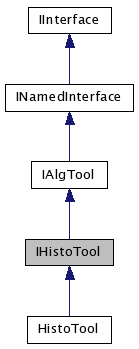
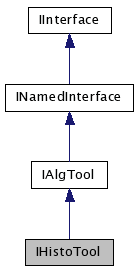
Public Types | |
| typedef Histos::HistoID | HistoID |
| the actual type for histogram identifier (HBOOK style) | |
Public Member Functions | |
| DeclareInterfaceID (IHistoTool, 2, 0) | |
| InterfaceID. | |
| virtual AIDA::IHistogram1D * | plot1D (const double value, const std::string &title, const double low, const double high, const unsigned long bins=100, const double weight=1.0) const =0 |
| fill the 1D histogram (book on demand) | |
| AIDA::IHistogram1D * | plot (const double value, const std::string &title, const double low, const double high, const unsigned long bins=100, const double weight=1.0) const |
| fill the 1D histogram (book on demand) | |
| virtual AIDA::IHistogram1D * | plot1D (const double value, const HistoID &ID, const std::string &title, const double low, const double high, const unsigned long bins=100, const double weight=1.0) const =0 |
| fill the 1D histogram with forced ID assignement (book on demand) | |
| AIDA::IHistogram1D * | plot (const double value, const HistoID &ID, const std::string &title, const double low, const double high, const unsigned long bins=100, const double weight=1.0) const |
| fill the 1D histogram with forced ID assignment (book on demand) | |
| virtual AIDA::IHistogram2D * | plot2D (const double valueX, const double valueY, const std::string &title, const double lowX, const double highX, const double lowY, const double highY, const unsigned long binsX=50, const unsigned long binsY=50, const double weight=1.0) const =0 |
| fill the 2D histogram (book on demand) | |
| virtual AIDA::IHistogram2D * | plot2D (const double valueX, const double valueY, const HistoID &ID, const std::string &title, const double lowX, const double highX, const double lowY, const double highY, const unsigned long binsX=50, const unsigned long binsY=50, const double weight=1.0) const =0 |
| fill the 2D histogram with forced ID assignment (book on demand) | |
| virtual AIDA::IHistogram3D * | plot3D (const double valueX, const double valueY, const double valueZ, const std::string &title, const double lowX, const double highX, const double lowY, const double highY, const double lowZ, const double highZ, const unsigned long binsX=10, const unsigned long binsY=10, const unsigned long binsZ=10, const double weight=1.0) const =0 |
| fill the 3D histogram (book on demand) | |
| virtual AIDA::IHistogram3D * | plot3D (const double valueX, const double valueY, const double valueZ, const HistoID &ID, const std::string &title, const double lowX, const double highX, const double lowY, const double highY, const double lowZ, const double highZ, const unsigned long binsX=10, const unsigned long binsY=10, const unsigned long binsZ=10, const double weight=1.0) const =0 |
| fill the 3D histogram with forced ID assignment (book on demand) | |
| virtual AIDA::IHistogram1D * | book1D (const std::string &title, const double low=0, const double high=100, const unsigned long bins=100) const =0 |
| book the 1D histogram | |
| AIDA::IHistogram1D * | book (const std::string &title, const double low=0, const double high=100, const unsigned long bins=100) const |
| book the 1D histogram | |
| virtual AIDA::IHistogram2D * | book2D (const std::string &title, const double lowX=0, const double highX=100, const unsigned long binsX=50, const double lowY=0, const double highY=100, const unsigned long binsY=50) const =0 |
| book the 2D histogram | |
| virtual AIDA::IHistogram3D * | book3D (const std::string &title, const double lowX=0, const double highX=100, const unsigned long binsX=10, const double lowY=0, const double highY=100, const unsigned long binsY=10, const double lowZ=0, const double highZ=100, const unsigned long binsZ=10) const =0 |
| book the 3D histogram | |
| virtual AIDA::IHistogram1D * | book1D (const HistoID &ID, const std::string &title="", const double low=0, const double high=100, const unsigned long bins=100) const =0 |
| book the 1D histogram with forced ID | |
| AIDA::IHistogram1D * | book (const HistoID &ID, const std::string &title="", const double low=0, const double high=100, const unsigned long bins=100) const |
| book the 1D histogram with forced ID | |
| virtual AIDA::IHistogram2D * | book2D (const HistoID &ID, const std::string &title, const double lowX=0, const double highX=100, const unsigned long binsX=100, const double lowY=0, const double highY=100, const unsigned long binsY=100) const =0 |
| book the 2D histogram with forced ID | |
| virtual AIDA::IHistogram3D * | book3D (const HistoID &ID, const std::string &title, const double lowX=0, const double highX=100, const unsigned long binsX=10, const double lowY=0, const double highY=100, const unsigned long binsY=10, const double lowZ=0, const double highZ=100, const unsigned long binsZ=10) const =0 |
| book the 3D histogram with forced ID | |
| virtual AIDA::IHistogram1D * | fill (AIDA::IHistogram1D *histo, const double value, const double weight, const std::string &title="") const =0 |
| fill the 1D histo with the value and weight | |
| virtual AIDA::IHistogram2D * | fill (AIDA::IHistogram2D *histo, const double valueX, const double valueY, const double weight, const std::string &title="") const =0 |
| fill the 2D histo with the value and weight | |
| virtual AIDA::IHistogram3D * | fill (AIDA::IHistogram3D *histo, const double valueX, const double valueY, const double valueZ, const double weight, const std::string &title="") const =0 |
| fill the 3D histo with the value and weight | |
| virtual AIDA::IHistogram1D * | histo1D (const std::string &title) const =0 |
| access the EXISTING 1D histogram by title return the pointer to existing 1D histogram or NULL | |
| AIDA::IHistogram1D * | histo (const std::string &title) const |
| access the EXISTING 1D histogram by title | |
| virtual AIDA::IHistogram2D * | histo2D (const std::string &title) const =0 |
| access the EXISTING 2D histogram by title return the pointer to existing 2D histogram or NULL | |
| virtual AIDA::IHistogram3D * | histo3D (const std::string &title) const =0 |
| access the EXISTING 3D histogram by title return the pointer to existing 3D histogram or NULL | |
| virtual AIDA::IHistogram1D * | histo1D (const HistoID &ID) const =0 |
| access the EXISTING 1D histogram by ID return the pointer to existing 1D histogram or NULL | |
| AIDA::IHistogram1D * | histo (const HistoID &ID) const |
| access the EXISTING 1D histogram by ID | |
| virtual AIDA::IHistogram2D * | histo2D (const HistoID &ID) const =0 |
| access the EXISTING 2D histogram by ID return the pointer to existing 2D histogram or NULL | |
| virtual AIDA::IHistogram3D * | histo3D (const HistoID &ID) const =0 |
| access the EXISTING 3D histogram by ID return the pointer to existing 3D histogram or NULL | |
| virtual bool | histoExists (const std::string &title) const =0 |
| check the existence AND validity of the histogram with given title | |
| virtual bool | histoExists (const HistoID &ID) const =0 |
| check the existence AND validity of the histogram with given title | |
| template<class FUNCTION, class OBJECT> | |
| AIDA::IHistogram1D * | plot (const FUNCTION &func, OBJECT first, OBJECT last, const std::string &title, const double low, const double high, const unsigned long bins=100) const |
| fill the 1D histogram with information from [first,last) sequence | |
| template<class FUNCTION, class OBJECT> | |
| AIDA::IHistogram1D * | plot (const FUNCTION &func, OBJECT first, OBJECT last, const HistoID &ID, const std::string &title, const double low, const double high, const unsigned long bins=100) const |
| fill the 1D histogram with forced ID and information from [first,last) sequence | |
| template<class FUNCTION, class OBJECT, class WEIGHT> | |
| AIDA::IHistogram1D * | plot (const FUNCTION &func, OBJECT first, OBJECT last, const std::string &title, const double low, const double high, const unsigned long bins, const WEIGHT &weight) const |
| book and fill the 1D histogram with information from [first,last) sequence with given weight | |
| template<class FUNCTION, class OBJECT, class WEIGHT> | |
| AIDA::IHistogram1D * | plot (const FUNCTION &func, OBJECT first, OBJECT last, const HistoID &ID, const std::string &title, const double low, const double high, const unsigned long bins, const WEIGHT &weight) const |
| book and fill the 1D histogram with forced ID and information from [first,last) sequence with given weight | |
Protected Member Functions | |
| virtual | ~IHistoTool () |
| destructor | |
Definition at line 33 of file IHistoTool.h.
| typedef Histos::HistoID IHistoTool::HistoID |
the actual type for histogram identifier (HBOOK style)
Reimplemented in HistoTool.
Definition at line 40 of file IHistoTool.h.
| IHistoTool::~IHistoTool | ( | ) | [protected, virtual] |
| IHistoTool::DeclareInterfaceID | ( | IHistoTool | , | |
| 2 | , | |||
| 0 | ||||
| ) |
| virtual AIDA::IHistogram1D* IHistoTool::plot1D | ( | const double | value, | |
| const std::string & | title, | |||
| const double | low, | |||
| const double | high, | |||
| const unsigned long | bins = 100, |
|||
| const double | weight = 1.0 | |||
| ) | const [pure virtual] |
fill the 1D histogram (book on demand)
     const double mass = ... ;
     plot1D( mass , "Invariant Mass" , 2.5 , 3.5 , 100 )
"InvariantMass" with value mass .low equal to 2.5, parameters high equal to 3.5 and bins equal to 100.The histogram will get a unique integer identifier automatically assigned.
| value | value to be filled | |
| title | histogram title (must be unique within the algorithm) | |
| low | low limit for histogram | |
| high | high limit for histogram | |
| bins | number of bins | |
| weight | weight |
Implemented in HistoTool.
| AIDA::IHistogram1D* IHistoTool::plot | ( | const double | value, | |
| const std::string & | title, | |||
| const double | low, | |||
| const double | high, | |||
| const unsigned long | bins = 100, |
|||
| const double | weight = 1.0 | |||
| ) | const [inline] |
fill the 1D histogram (book on demand)
Wrapper method for the equivalent plot1D method. Retained for backwards compatibility, please use plot1D instead.
| value | value to be filled | |
| title | histogram title (must be unique within the algorithm) | |
| low | low limit for histogram | |
| high | high limit for histogram | |
| bins | number of bins | |
| weight | weight |
Definition at line 96 of file IHistoTool.h.
| virtual AIDA::IHistogram1D* IHistoTool::plot1D | ( | const double | value, | |
| const HistoID & | ID, | |||
| const std::string & | title, | |||
| const double | low, | |||
| const double | high, | |||
| const unsigned long | bins = 100, |
|||
| const double | weight = 1.0 | |||
| ) | const [pure virtual] |
fill the 1D histogram with forced ID assignement (book on demand)
     const double mass = ... ;
     plot1D( mass , 15 , "Invariant Mass" , 2.5 , 3.5 , 100 )
"Invariant Mass" with value mass .low equal to 2.5, parameters high equal to 3.5 and bins equal to 100.
| value | value to be filled | |
| ID | histogram identifier | |
| title | histogram title (must be unique within the algorithm) | |
| low | low limit for histogram | |
| high | high limit for histogram | |
| bins | number of bins | |
| weight | weight |
Implemented in HistoTool.
| AIDA::IHistogram1D* IHistoTool::plot | ( | const double | value, | |
| const HistoID & | ID, | |||
| const std::string & | title, | |||
| const double | low, | |||
| const double | high, | |||
| const unsigned long | bins = 100, |
|||
| const double | weight = 1.0 | |||
| ) | const [inline] |
fill the 1D histogram with forced ID assignment (book on demand)
Wrapper method for the equivalent plot1D method. Retained for backwards compatibility, please use plot1D instead.
| value | value to be filled | |
| ID | histogram identifier | |
| title | histogram title (must be unique within the algorithm) | |
| low | low limit for histogram | |
| high | high limit for histogram | |
| bins | number of bins | |
| weight | weight |
Definition at line 170 of file IHistoTool.h.
| virtual AIDA::IHistogram2D* IHistoTool::plot2D | ( | const double | valueX, | |
| const double | valueY, | |||
| const std::string & | title, | |||
| const double | lowX, | |||
| const double | highX, | |||
| const double | lowY, | |||
| const double | highY, | |||
| const unsigned long | binsX = 50, |
|||
| const unsigned long | binsY = 50, |
|||
| const double | weight = 1.0 | |||
| ) | const [pure virtual] |
fill the 2D histogram (book on demand)
     const double mass1 = ... ;
     const double mass2 = ... ;
     plot2D( mass1, mass2, "Invariant Mass2 versus Mass1" ,2.5 ,3.5, 4.5, 5.5, 100, 200 );
"Invariant Mass2 versus Mass1" with values mass1 and mass2 .lowX equal to 2.5, highX equal to 3.5, lowY equal to 4.5, highY equal to 5.5, binsX equal to 100 and binsY equal to 200.The histogram will get a unique integer identifier automatically assigned
| valueX | x value to be filled | |
| valueY | y value to be filled | |
| title | histogram title (must be unique within the algorithm) | |
| lowX | low x limit for histogram | |
| highX | high x limit for histogram | |
| lowY | low y limit for histogram | |
| highY | high y limit for histogram | |
| binsX | number of bins in x | |
| binsY | number of bins in y | |
| weight | weight |
Implemented in HistoTool.
| virtual AIDA::IHistogram2D* IHistoTool::plot2D | ( | const double | valueX, | |
| const double | valueY, | |||
| const HistoID & | ID, | |||
| const std::string & | title, | |||
| const double | lowX, | |||
| const double | highX, | |||
| const double | lowY, | |||
| const double | highY, | |||
| const unsigned long | binsX = 50, |
|||
| const unsigned long | binsY = 50, |
|||
| const double | weight = 1.0 | |||
| ) | const [pure virtual] |
fill the 2D histogram with forced ID assignment (book on demand)
     const double mass1 = ... ;
     const double mass2 = ... ;
     plot2D( mass1, mass2, 15, "Invariant Mass2 versus Mass1" ,2.5 ,3.5, 4.5, 5.5, 100, 200 );
"Invariant Mass2 versus Mass1" with values mass1 and mass2 .lowX equal to 2.5, highX equal to 3.5, lowY equal to 4.5, highY equal to 5.5, binsX equal to 100 and binsY equal to 200.
| valueX | x value to be filled | |
| valueY | y value to be filled | |
| ID | Histogram ID to use | |
| title | histogram title (must be unique within the algorithm) | |
| lowX | low x limit for histogram | |
| highX | high x limit for histogram | |
| lowY | low y limit for histogram | |
| highY | high y limit for histogram | |
| binsX | number of bins in x | |
| binsY | number of bins in y | |
| weight | weight |
Implemented in HistoTool.
| virtual AIDA::IHistogram3D* IHistoTool::plot3D | ( | const double | valueX, | |
| const double | valueY, | |||
| const double | valueZ, | |||
| const std::string & | title, | |||
| const double | lowX, | |||
| const double | highX, | |||
| const double | lowY, | |||
| const double | highY, | |||
| const double | lowZ, | |||
| const double | highZ, | |||
| const unsigned long | binsX = 10, |
|||
| const unsigned long | binsY = 10, |
|||
| const unsigned long | binsZ = 10, |
|||
| const double | weight = 1.0 | |||
| ) | const [pure virtual] |
fill the 3D histogram (book on demand)
     const double mass1 = ... ;
     const double mass2 = ... ;
     const double mass3 = ... ;
     plot3D( X, Y, Z, "Space Points" ,2.5 ,3.5, 4.5, 5.5, 6.5, 7.5, 10, 20, 30 );
"Space Points" with values X, Y and Z.lowX equal to 2.5, highX equal to 3.5, lowY equal to 4.5, highY equal to 5.5, lowZ equal to 6.5, highZ equal to 7.5, binsX equal to 10, binsY equal to 20 and binsZ equal to 30.The histogram will get a unique integer identifier automatically assigned
| valueX | x value to be filled | |
| valueY | y value to be filled | |
| valueZ | z value to be filled | |
| title | histogram title (must be unique within the algorithm) | |
| lowX | low x limit for histogram | |
| highX | high x limit for histogram | |
| lowY | low y limit for histogram | |
| highY | high y limit for histogram | |
| lowZ | low z limit for histogram | |
| highZ | high z limit for histogram | |
| binsX | number of bins in x | |
| binsY | number of bins in y | |
| binsZ | number of bins in z | |
| weight | weight |
Implemented in HistoTool.
| virtual AIDA::IHistogram3D* IHistoTool::plot3D | ( | const double | valueX, | |
| const double | valueY, | |||
| const double | valueZ, | |||
| const HistoID & | ID, | |||
| const std::string & | title, | |||
| const double | lowX, | |||
| const double | highX, | |||
| const double | lowY, | |||
| const double | highY, | |||
| const double | lowZ, | |||
| const double | highZ, | |||
| const unsigned long | binsX = 10, |
|||
| const unsigned long | binsY = 10, |
|||
| const unsigned long | binsZ = 10, |
|||
| const double | weight = 1.0 | |||
| ) | const [pure virtual] |
fill the 3D histogram with forced ID assignment (book on demand)
     const double mass1 = ... ;
     const double mass2 = ... ;
     const double mass3 = ... ;
     plot3D( X, Y, Z, "Space Points" ,2.5 ,3.5, 4.5, 5.5, 6.5, 7.5, 10, 20, 30 );
"Space Points" with values X, Y and Z.lowX equal to 2.5, highX equal to 3.5, lowY equal to 4.5, highY equal to 5.5, lowZ equal to 6.5, highZ equal to 7.5, binsX equal to 10, binsY equal to 20 and binsZ equal to 30.
| valueX | x value to be filled | |
| valueY | y value to be filled | |
| valueZ | z value to be filled | |
| ID | Histogram ID to use | |
| title | histogram title (must be unique within the algorithm) | |
| lowX | low x limit for histogram | |
| highX | high x limit for histogram | |
| lowY | low y limit for histogram | |
| highY | high y limit for histogram | |
| lowZ | low z limit for histogram | |
| highZ | high z limit for histogram | |
| binsX | number of bins in x | |
| binsY | number of bins in y | |
| binsZ | number of bins in z | |
| weight | weight |
Implemented in HistoTool.
| virtual AIDA::IHistogram1D* IHistoTool::book1D | ( | const std::string & | title, | |
| const double | low = 0, |
|||
| const double | high = 100, |
|||
| const unsigned long | bins = 100 | |||
| ) | const [pure virtual] |
book the 1D histogram
The histogram will be assigned a unique identifier
| title | histogram title (must be unique within the algorithm) | |
| low | low limit for histogram | |
| high | high limit for histogram | |
| bins | number of bins |
Implemented in HistoTool.
| AIDA::IHistogram1D* IHistoTool::book | ( | const std::string & | title, | |
| const double | low = 0, |
|||
| const double | high = 100, |
|||
| const unsigned long | bins = 100 | |||
| ) | const [inline] |
book the 1D histogram
Wrapper method for the equivalent book1D method. Retained for backwards compatibility, please use book1D instead.
| title | histogram title (must be unique within the algorithm) | |
| low | low limit for histogram | |
| high | high limit for histogram | |
| bins | number of bins |
Definition at line 447 of file IHistoTool.h.
| virtual AIDA::IHistogram2D* IHistoTool::book2D | ( | const std::string & | title, | |
| const double | lowX = 0, |
|||
| const double | highX = 100, |
|||
| const unsigned long | binsX = 50, |
|||
| const double | lowY = 0, |
|||
| const double | highY = 100, |
|||
| const unsigned long | binsY = 50 | |||
| ) | const [pure virtual] |
book the 2D histogram
The histogram will be assigned a unique identifier
| title | histogram title (must be unique within the algorithm) | |
| lowX | low x limit for histogram | |
| highX | high x limit for histogram | |
| binsX | number of bins in x | |
| lowY | low y limit for histogram | |
| highY | high y limit for histogram | |
| binsY | number of bins in y |
Implemented in HistoTool.
| virtual AIDA::IHistogram3D* IHistoTool::book3D | ( | const std::string & | title, | |
| const double | lowX = 0, |
|||
| const double | highX = 100, |
|||
| const unsigned long | binsX = 10, |
|||
| const double | lowY = 0, |
|||
| const double | highY = 100, |
|||
| const unsigned long | binsY = 10, |
|||
| const double | lowZ = 0, |
|||
| const double | highZ = 100, |
|||
| const unsigned long | binsZ = 10 | |||
| ) | const [pure virtual] |
book the 3D histogram
The histogram will be assigned a unique identifier
| title | histogram title (must be unique within the algorithm) | |
| lowX | low x limit for histogram | |
| highX | high x limit for histogram | |
| binsX | number of bins in x | |
| lowY | low y limit for histogram | |
| highY | high y limit for histogram | |
| binsY | number of bins in y | |
| lowZ | low y limit for histogram | |
| highZ | high y limit for histogram | |
| binsZ | number of bins in y |
Implemented in HistoTool.
| virtual AIDA::IHistogram1D* IHistoTool::book1D | ( | const HistoID & | ID, | |
| const std::string & | title = "", |
|||
| const double | low = 0, |
|||
| const double | high = 100, |
|||
| const unsigned long | bins = 100 | |||
| ) | const [pure virtual] |
| AIDA::IHistogram1D* IHistoTool::book | ( | const HistoID & | ID, | |
| const std::string & | title = "", |
|||
| const double | low = 0, |
|||
| const double | high = 100, |
|||
| const unsigned long | bins = 100 | |||
| ) | const [inline] |
book the 1D histogram with forced ID
Wrapper method for the equivalent book1D method. Retained for backwards compatibility, please use book1D instead.
| ID | unique histogram ID | |
| title | histogram title (must be unique within the algorithm) | |
| low | low limit for histogram | |
| high | high limit for histogram | |
| bins | number of bins |
Definition at line 538 of file IHistoTool.h.
| virtual AIDA::IHistogram2D* IHistoTool::book2D | ( | const HistoID & | ID, | |
| const std::string & | title, | |||
| const double | lowX = 0, |
|||
| const double | highX = 100, |
|||
| const unsigned long | binsX = 100, |
|||
| const double | lowY = 0, |
|||
| const double | highY = 100, |
|||
| const unsigned long | binsY = 100 | |||
| ) | const [pure virtual] |
| virtual AIDA::IHistogram3D* IHistoTool::book3D | ( | const HistoID & | ID, | |
| const std::string & | title, | |||
| const double | lowX = 0, |
|||
| const double | highX = 100, |
|||
| const unsigned long | binsX = 10, |
|||
| const double | lowY = 0, |
|||
| const double | highY = 100, |
|||
| const unsigned long | binsY = 10, |
|||
| const double | lowZ = 0, |
|||
| const double | highZ = 100, |
|||
| const unsigned long | binsZ = 10 | |||
| ) | const [pure virtual] |
book the 3D histogram with forced ID
| ID | unique histogram ID | |
| title | histogram title (must be unique within the algorithm) | |
| lowX | low x limit for histogram | |
| highX | high x limit for histogram | |
| binsX | number of bins in x | |
| lowY | low y limit for histogram | |
| highY | high y limit for histogram | |
| binsY | number of bins in y | |
| lowZ | low y limit for histogram | |
| highZ | high y limit for histogram | |
| binsZ | number of bins in y |
Implemented in HistoTool.
| virtual AIDA::IHistogram1D* IHistoTool::fill | ( | AIDA::IHistogram1D * | histo, | |
| const double | value, | |||
| const double | weight, | |||
| const std::string & | title = "" | |||
| ) | const [pure virtual] |
| virtual AIDA::IHistogram2D* IHistoTool::fill | ( | AIDA::IHistogram2D * | histo, | |
| const double | valueX, | |||
| const double | valueY, | |||
| const double | weight, | |||
| const std::string & | title = "" | |||
| ) | const [pure virtual] |
fill the 2D histo with the value and weight
| histo | 2D histogram to be filled | |
| valueX | x value to be put into the histogram | |
| valueY | y value to be put into the histogram | |
| weight | weight to be used | |
| title | histogram title (to be used for error report) |
Implemented in HistoTool.
| virtual AIDA::IHistogram3D* IHistoTool::fill | ( | AIDA::IHistogram3D * | histo, | |
| const double | valueX, | |||
| const double | valueY, | |||
| const double | valueZ, | |||
| const double | weight, | |||
| const std::string & | title = "" | |||
| ) | const [pure virtual] |
fill the 3D histo with the value and weight
| histo | 3D histogram to be filled | |
| valueX | x value to be put into the histogram | |
| valueY | y value to be put into the histogram | |
| valueZ | z value to be put into the histogram | |
| weight | weight to be used | |
| title | histogram title (to be used for error report) |
Implemented in HistoTool.
| virtual AIDA::IHistogram1D* IHistoTool::histo1D | ( | const std::string & | title | ) | const [pure virtual] |
access the EXISTING 1D histogram by title return the pointer to existing 1D histogram or NULL
Implemented in HistoTool.
| AIDA::IHistogram1D* IHistoTool::histo | ( | const std::string & | title | ) | const [inline] |
access the EXISTING 1D histogram by title
Wrapper method for the equivalent histo1D method. Retained for backwards compatibility, please use histo1D instead.
return the pointer to existing 1D histogram or NULL
Definition at line 653 of file IHistoTool.h.
00654   {
00655     return histo1D( title );
00656   };
| virtual AIDA::IHistogram2D* IHistoTool::histo2D | ( | const std::string & | title | ) | const [pure virtual] |
access the EXISTING 2D histogram by title return the pointer to existing 2D histogram or NULL
Implemented in HistoTool.
| virtual AIDA::IHistogram3D* IHistoTool::histo3D | ( | const std::string & | title | ) | const [pure virtual] |
access the EXISTING 3D histogram by title return the pointer to existing 3D histogram or NULL
Implemented in HistoTool.
| virtual AIDA::IHistogram1D* IHistoTool::histo1D | ( | const HistoID & | ID | ) | const [pure virtual] |
access the EXISTING 1D histogram by ID return the pointer to existing 1D histogram or NULL
Implemented in HistoTool.
| AIDA::IHistogram1D* IHistoTool::histo | ( | const HistoID & | ID | ) | const [inline] |
access the EXISTING 1D histogram by ID
Wrapper method for the equivalent histo1D method. Retained for backwards compatibility, please use histo1D instead.
return the pointer to existing 1D histogram or NULL
Definition at line 681 of file IHistoTool.h.
| virtual AIDA::IHistogram2D* IHistoTool::histo2D | ( | const HistoID & | ID | ) | const [pure virtual] |
access the EXISTING 2D histogram by ID return the pointer to existing 2D histogram or NULL
Implemented in HistoTool.
| virtual AIDA::IHistogram3D* IHistoTool::histo3D | ( | const HistoID & | ID | ) | const [pure virtual] |
access the EXISTING 3D histogram by ID return the pointer to existing 3D histogram or NULL
Implemented in HistoTool.
| virtual bool IHistoTool::histoExists | ( | const std::string & | title | ) | const [pure virtual] |
| AIDA::IHistogram1D* IHistoTool::plot | ( | const FUNCTION & | func, | |
| OBJECT | first, | |||
| OBJECT | last, | |||
| const std::string & | title, | |||
| const double | low, | |||
| const double | high, | |||
| const unsigned long | bins = 100 | |||
| ) | const [inline] |
fill the 1D histogram with information from [first,last) sequence
  std::vector<double> v = ... ;

  plot( sin                 , // function
        v.begin() , v.end() , // sequence
        " bla-bla "         , // title
        -1. , 1.0           , // low and high limits
        100                 ) // number of bins
The histogram will get a unique integer identifier automatically assigned
Sequence, objects and function can be non-trivial:
  Particles* p = ... ;

  plot( PT                  , // function
        p->begin()  , p->end() , // sequence
        " bla-bla "         , // title
        -1. , 1.0           , // low and high limits
        100                 ) ; // number of bins
PT can be any function or function object for which the expression PT(p) , with p of type Particle* have some sense and can be evaluated to the values, which is convertible to doubleNote : These plot methods using iterator ranges are more efficient than the simplier "value" only methods, since the associated histogram only requires locating from internal storage once per loop, as opposed to once per fill for the simplier functions. It is recommended to use these whenever possible.
| func | function to be plotted | |
| first | begin of the sequence | |
| last | end of the sequence | |
| title | histogram title | |
| low | low limit for histogram | |
| high | high limit for histogram | |
| bins | number of bins for histogram |
Definition at line 755 of file IHistoTool.h.
00762   {
00763     // retrieve or book the histogram
00764     AIDA::IHistogram1D* h = histo1D ( title ) ;
00765     if ( 0 == h )     { h = book1D  ( title , low , high , bins ); }
00766     while ( first != last && 0 != h  )
00767     { h = fill ( h , func( *first ) , 1.0 , title  ) ; ++first ; }
00768     return h ;
00769   }
| AIDA::IHistogram1D* IHistoTool::plot | ( | const FUNCTION & | func, | |
| OBJECT | first, | |||
| OBJECT | last, | |||
| const HistoID & | ID, | |||
| const std::string & | title, | |||
| const double | low, | |||
| const double | high, | |||
| const unsigned long | bins = 100 | |||
| ) | const [inline] |
fill the 1D histogram with forced ID and information from [first,last) sequence
  std::vector<double> v = ... ;

  plot( sin                 ,   // function
        v.begin() , v.end() ,   // sequence
        100 , " bla-bla "   ,   // ID and title
        -1. , 1.0           ,   // low and high limits
        100                 );  // number of bins
Sequence, objects and function can be non-trivial:
  Particles* p = ... ;

  plot( PT                  ,   // function
        p->begin()   , p->end() , // sequence
        100 , " bla-bla "   ,   // ID and title
        -1. , 1.0           ,   // low and high limits
        100                 ) ; // number of bins
Note : These plot methods using iterator ranges are more efficient than the simplier "value" only methods, since the associated histogram only requires locating from internal storage once per loop, as opposed to once per fill for the simplier functions. It is recommended to use these whenever possible.
Note : This method is more efficient that the similar method without forced ID, since the histogram lookup is faster using a numerical ID.
| func | function to be plotted | |
| first | begin of the sequence | |
| last | end of the sequence | |
| ID | histogram identifier | |
| title | histogram title | |
| low | low limit for histogram | |
| high | high limit for histogram | |
| bins | number of bins for histogram |
Definition at line 822 of file IHistoTool.h.
00830   {
00831     // retrieve or book the histogram
00832     AIDA::IHistogram1D* h = histo1D ( ID ) ;
00833     if ( 0 == h )     { h = book1D  ( ID , title , low , high , bins ); }
00834     while ( first != last && 0 != h )
00835     { h = fill( h , func( *first ) , 1.0 , title  ) ; ++first ; }
00836     return h ;
00837   }
| AIDA::IHistogram1D* IHistoTool::plot | ( | const FUNCTION & | func, | |
| OBJECT | first, | |||
| OBJECT | last, | |||
| const std::string & | title, | |||
| const double | low, | |||
| const double | high, | |||
| const unsigned long | bins, | |||
| const WEIGHT & | weight | |||
| ) | const [inline] |
book and fill the 1D histogram with information from [first,last) sequence with given weight
  std::vector<double> v = ... ;

  plot( sin                 ,   // function
        v.begin() , v.end() ,   // sequence
        " bla-bla "         ,   // title
        -1. , 1.0           ,   // low and high limits
        100                 ,   // number of bins
        tanh                );  // weight function
The histogram will get a unique integer identifier automatically assigned
Sequence, objects and function can be non-trivial:
  Particles* p = ... ;

  plot( PT                  ,  // function
        p->begin()  , p->end() , // sequence
        " bla-bla "         ,   // title
        -1. , 1.0           ,   // low and high limits
        100                 ,   // number of bins
        MASS                ) ; // weight function
PT and MASS can be any function or function object for which the expressions PT(p) and MASS with p of type Particle* have some sense and can be evaluated to the values, which is convertible to doubleNote : These plot methods using iterator ranges are more efficient than the simplier "value" only methods, since the associated histogram only requires locating from internal storage once per loop, as opposed to once per fill for the simplier functions. It is recommended to use these whenever possible.
| first | begin of the sequence | |
| last | end of the sequence | |
| title | histogram title | |
| func | function to be plotted | |
| low | low limit for histogram | |
| high | high limit for histogram | |
| bins | number of bins for histogram | |
| weight | weight function |
Definition at line 895 of file IHistoTool.h.
00903   {
00904     // retrieve or book the histogram
00905     AIDA::IHistogram1D* h = histo1D ( title ) ;
00906     if ( 0 == h     ) { h = book1D  ( title , low , high , bins ); }
00907     while( first != last && 0 != h )
00908     { h = fill ( h                 ,
00909                  func   ( *first ) ,
00910                  weight ( *first ) , title  ) ; ++first ; }
00911     return h ;
00912   }
| AIDA::IHistogram1D* IHistoTool::plot | ( | const FUNCTION & | func, | |
| OBJECT | first, | |||
| OBJECT | last, | |||
| const HistoID & | ID, | |||
| const std::string & | title, | |||
| const double | low, | |||
| const double | high, | |||
| const unsigned long | bins, | |||
| const WEIGHT & | weight | |||
| ) | const [inline] |
book and fill the 1D histogram with forced ID and information from [first,last) sequence with given weight
  std::vector<double> v = ... ;

  plot( sin                 ,   // function
        v.begin() , v.end() ,   // sequence
        100 , " bla-bla "   ,   // ID and title
        -1. , 1.0           ,   // low and high limits
        100                 ,   // number of bins
        sinh                );  // weight function
  Particles* p = ... ;

  plot( PT                  ,   // function
        p->begin()   , p->end() , // sequence
        100 , " bla-bla "   ,   // ID and title
        -1. , 1.0           ,   // low and high limits
        100                 ,   // number of bins
        MASS                ) ; // weight function
PT and MASS can be any function or function object for which the expressions PT(p) and MASS with p of type Particle* have some sense and can be evaluated to the values, which is convertible to doubleNote : These plot methods using iterator ranges are more efficient than the simplier "value" only methods, since the associated histogram only requires locating from internal storage once per loop, as opposed to once per fill for the simplier functions. It is recommended to use these whenever possible.
Note : This method is more efficient that the similar method without forced ID, since the histogram lookup is faster using a numerical ID.
| first | begin of the sequence | |
| last | end of the sequence | |
| ID | histogram identifier | |
| title | histogram title | |
| func | function to be plotted | |
| low | low limit for histogram | |
| high | high limit for histogram | |
| bins | number of bins for histogram | |
| weight | weight function |
Definition at line 975 of file IHistoTool.h.
00984   {
00985     // retrieve or book the histogram
00986     AIDA::IHistogram1D* h = histo1D ( ID ) ;
00987     if ( 0 == h     ) { h = book1D  ( ID , title , low , high , bins ); }
00988     while( first != last && 0 != h )
00989     { h  = fill ( h                 ,
00990                   func   ( *first ) ,
00991                   weight ( *first ) , title  ) ; ++first ; }
00992     return h ;
00993   }