
|
Gaudi Framework, version v22r0 |
| Home | Generated: 9 Feb 2011 |
|
|
Gaudi Framework, version v22r0 |
| Home | Generated: 9 Feb 2011 |
Public Member Functions | |
| def | PlatformIsNotSupported |
| def | GetPlatform |
| def | CheckTTreesSummaries |
| def | CheckHistosSummaries |
| def | ValidateWithReference |
| def | ValidateOutput |
| def | DumpEnvironment |
| def | Run |
| def | RunProgram |
Public Attributes | |
| callable | |
| extra_args | |
| args_order | |
| program | |
| reference | |
| error_reference | |
| use_temp_dir | |
| timeout | |
Static Public Attributes | |
| list | arguments |
Private Member Functions | |
| def | _expandReferenceFileName |
| def | _find_program |
| def | _CreateEclipseLaunch |
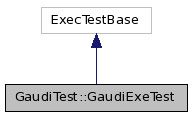
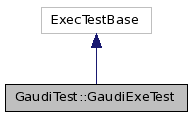
Standard Gaudi test.
Definition at line 971 of file GaudiTest.py.
| def GaudiTest::GaudiExeTest::_CreateEclipseLaunch | ( | self, | ||
| prog, | ||||
| args, | ||||
destdir = None | ||||
| ) | [private] |
Definition at line 1551 of file GaudiTest.py.
01552 : 01553 # Find the project name used in ecplise. 01554 # The name is in a file called ".project" in one of the parent directories 01555 projbasedir = os.path.normpath(destdir) 01556 while not os.path.exists(os.path.join(projbasedir, ".project")): 01557 oldprojdir = projbasedir 01558 projbasedir = os.path.normpath(os.path.join(projbasedir, os.pardir)) 01559 # FIXME: the root level is invariant when trying to go up one level, 01560 # but it must be cheched on windows 01561 if oldprojdir == projbasedir: 01562 # If we cannot find a .project, so no point in creating a .launch file 01563 return 01564 # Use ElementTree to parse the XML file 01565 from xml.etree import ElementTree as ET 01566 t = ET.parse(os.path.join(projbasedir, ".project")) 01567 projectName = t.find("name").text 01568 01569 # prepare the name/path of the generated file 01570 destfile = "%s.launch" % self._Runnable__id 01571 if destdir: 01572 destfile = os.path.join(destdir, destfile) 01573 01574 if self.options.strip(): 01575 # this means we have some custom options in the qmt file, so we have 01576 # to copy them from the temporary file at the end of the arguments 01577 # in another file 01578 tempfile = args.pop() 01579 optsfile = destfile + os.path.splitext(tempfile)[1] 01580 shutil.copyfile(tempfile, optsfile) 01581 args.append(optsfile) 01582 01583 # prepare the data to insert in the XML file 01584 from xml.sax.saxutils import quoteattr # useful to quote XML special chars 01585 data = {} 01586 # Note: the "quoteattr(k)" is not needed because special chars cannot be part of a variable name, 01587 # but it doesn't harm. 01588 data["environment"] = "\n".join(['<mapEntry key=%s value=%s/>' % (quoteattr(k), quoteattr(v)) 01589 for k, v in os.environ.iteritems()]) 01590 01591 data["exec"] = which(prog) 01592 if os.path.basename(data["exec"]).lower().startswith("python"): 01593 data["stopAtMain"] = "false" # do not stop at main when debugging Python scripts 01594 else: 01595 data["stopAtMain"] = "true" 01596 01597 data["args"] = " ".join(map(rationalizepath, args)) 01598 01599 if not self.use_temp_dir: 01600 data["workdir"] = os.getcwd() 01601 else: 01602 # If the test is using a tmporary directory, it is better to run it 01603 # in the same directory as the .launch file when debugged in eclipse 01604 data["workdir"] = destdir 01605 01606 data["project"] = projectName.strip() 01607 01608 # Template for the XML file, based on eclipse 3.4 01609 xml = """<?xml version="1.0" encoding="UTF-8" standalone="no"?> 01610 <launchConfiguration type="org.eclipse.cdt.launch.applicationLaunchType"> 01611 <booleanAttribute key="org.eclipse.cdt.debug.mi.core.AUTO_SOLIB" value="true"/> 01612 <listAttribute key="org.eclipse.cdt.debug.mi.core.AUTO_SOLIB_LIST"/> 01613 <stringAttribute key="org.eclipse.cdt.debug.mi.core.DEBUG_NAME" value="gdb"/> 01614 <stringAttribute key="org.eclipse.cdt.debug.mi.core.GDB_INIT" value=".gdbinit"/> 01615 <listAttribute key="org.eclipse.cdt.debug.mi.core.SOLIB_PATH"/> 01616 <booleanAttribute key="org.eclipse.cdt.debug.mi.core.STOP_ON_SOLIB_EVENTS" value="false"/> 01617 <booleanAttribute key="org.eclipse.cdt.debug.mi.core.breakpointsFullPath" value="false"/> 01618 <stringAttribute key="org.eclipse.cdt.debug.mi.core.commandFactory" value="org.eclipse.cdt.debug.mi.core.standardCommandFactory"/> 01619 <stringAttribute key="org.eclipse.cdt.debug.mi.core.protocol" value="mi"/> 01620 <booleanAttribute key="org.eclipse.cdt.debug.mi.core.verboseMode" value="false"/> 01621 <intAttribute key="org.eclipse.cdt.launch.ATTR_BUILD_BEFORE_LAUNCH_ATTR" value="0"/> 01622 <stringAttribute key="org.eclipse.cdt.launch.COREFILE_PATH" value=""/> 01623 <stringAttribute key="org.eclipse.cdt.launch.DEBUGGER_ID" value="org.eclipse.cdt.debug.mi.core.CDebuggerNew"/> 01624 <stringAttribute key="org.eclipse.cdt.launch.DEBUGGER_REGISTER_GROUPS" value=""/> 01625 <stringAttribute key="org.eclipse.cdt.launch.DEBUGGER_START_MODE" value="run"/> 01626 <booleanAttribute key="org.eclipse.cdt.launch.DEBUGGER_STOP_AT_MAIN" value="%(stopAtMain)s"/> 01627 <stringAttribute key="org.eclipse.cdt.launch.DEBUGGER_STOP_AT_MAIN_SYMBOL" value="main"/> 01628 <booleanAttribute key="org.eclipse.cdt.launch.ENABLE_REGISTER_BOOKKEEPING" value="false"/> 01629 <booleanAttribute key="org.eclipse.cdt.launch.ENABLE_VARIABLE_BOOKKEEPING" value="false"/> 01630 <stringAttribute key="org.eclipse.cdt.launch.FORMAT" value="<?xml version="1.0" encoding="UTF-8" standalone="no"?><contentList/>"/> 01631 <stringAttribute key="org.eclipse.cdt.launch.GLOBAL_VARIABLES" value="<?xml version="1.0" encoding="UTF-8" standalone="no"?> <globalVariableList/> "/> 01632 <stringAttribute key="org.eclipse.cdt.launch.MEMORY_BLOCKS" value="<?xml version="1.0" encoding="UTF-8" standalone="no"?> <memoryBlockExpressionList/> "/> 01633 <stringAttribute key="org.eclipse.cdt.launch.PROGRAM_ARGUMENTS" value="%(args)s"/> 01634 <stringAttribute key="org.eclipse.cdt.launch.PROGRAM_NAME" value="%(exec)s"/> 01635 <stringAttribute key="org.eclipse.cdt.launch.PROJECT_ATTR" value="%(project)s"/> 01636 <stringAttribute key="org.eclipse.cdt.launch.PROJECT_BUILD_CONFIG_ID_ATTR" value=""/> 01637 <stringAttribute key="org.eclipse.cdt.launch.WORKING_DIRECTORY" value="%(workdir)s"/> 01638 <booleanAttribute key="org.eclipse.cdt.launch.ui.ApplicationCDebuggerTab.DEFAULTS_SET" value="true"/> 01639 <booleanAttribute key="org.eclipse.cdt.launch.use_terminal" value="true"/> 01640 <listAttribute key="org.eclipse.debug.core.MAPPED_RESOURCE_PATHS"> 01641 <listEntry value="/%(project)s"/> 01642 </listAttribute> 01643 <listAttribute key="org.eclipse.debug.core.MAPPED_RESOURCE_TYPES"> 01644 <listEntry value="4"/> 01645 </listAttribute> 01646 <booleanAttribute key="org.eclipse.debug.core.appendEnvironmentVariables" value="false"/> 01647 <mapAttribute key="org.eclipse.debug.core.environmentVariables"> 01648 %(environment)s 01649 </mapAttribute> 01650 <mapAttribute key="org.eclipse.debug.core.preferred_launchers"> 01651 <mapEntry key="[debug]" value="org.eclipse.cdt.cdi.launch.localCLaunch"/> 01652 </mapAttribute> 01653 <listAttribute key="org.eclipse.debug.ui.favoriteGroups"> 01654 <listEntry value="org.eclipse.debug.ui.launchGroup.debug"/> 01655 </listAttribute> 01656 </launchConfiguration> 01657 """ % data 01658 01659 # Write the output file 01660 open(destfile, "w").write(xml) 01661 #open(destfile + "_copy.xml", "w").write(xml) 01662 01663 try:
| def GaudiTest::GaudiExeTest::_expandReferenceFileName | ( | self, | ||
| reffile | ||||
| ) | [private] |
Definition at line 1114 of file GaudiTest.py.
01115                                                :
01116         # if no file is passed, do nothing
01117         if not reffile:
01118             return ""
01119
01120         reference = os.path.normpath(os.path.expandvars(reffile))
01121         # old-style platform-specific reference name
01122         spec_ref = reference[:-3] + self.GetPlatform()[0:3] + reference[-3:]
01123         if os.path.isfile(spec_ref):
01124             reference = spec_ref
01125         else: # look for new-style platform specific reference files:
01126             # get all the files whose name start with the reference filename
01127             dirname, basename = os.path.split(reference)
01128             if not dirname: dirname = '.'
01129             head = basename + "."
01130             head_len = len(head)
01131             platform = self.GetPlatform()
01132             candidates = []
01133             for f in os.listdir(dirname):
01134                 if f.startswith(head) and platform.startswith(f[head_len:]):
01135                     candidates.append( (len(f) - head_len, f) )
01136             if candidates: # take the one with highest matching
01137                 candidates.sort()
01138                 reference = os.path.join(dirname, candidates[-1][1])
01139         return reference
| def GaudiTest::GaudiExeTest::_find_program | ( | self, | ||
| prog | ||||
| ) | [private] |
Definition at line 1341 of file GaudiTest.py.
01342                                 :
01343         # check if it is an absolute path or the file can be found
01344         # from the local directory, otherwise search for it in PATH
01345         if not os.path.isabs(prog) and not os.path.isfile(prog):
01346             for d in os.environ["PATH"].split(os.pathsep):
01347                 p = os.path.join(d,prog)
01348                 if os.path.isfile(p):
01349                     return p
01350         return prog
| def GaudiTest::GaudiExeTest::CheckHistosSummaries | ( | self, | ||
| stdout, | ||||
| result, | ||||
| causes, | ||||
dict = None, |
||||
ignore = None | ||||
| ) |
Compare the TTree summaries in stdout with the ones in trees_dict or in
the reference file. By default ignore the size, compression and basket
fields.
The presence of TTree summaries when none is expected is not a failure.
Definition at line 1174 of file GaudiTest.py.
01177                                            :
01178         """
01179         Compare the TTree summaries in stdout with the ones in trees_dict or in
01180         the reference file. By default ignore the size, compression and basket
01181         fields.
01182         The presence of TTree summaries when none is expected is not a failure.
01183         """
01184         if dict is None:
01185             reference = self._expandReferenceFileName(self.reference)
01186             # call the validator if the file exists
01187             if reference and os.path.isfile(reference):
01188                 dict = findHistosSummaries(open(reference).read())
01189             else:
01190                 dict = {}
01191
01192         from pprint import PrettyPrinter
01193         pp = PrettyPrinter()
01194         if dict:
01195             result["GaudiTest.Histos.expected"] = result.Quote(pp.pformat(dict))
01196             if ignore:
01197                 result["GaudiTest.Histos.ignore"] = result.Quote(ignore)
01198
01199         histos = findHistosSummaries(stdout)
01200         failed = cmpTreesDicts(dict, histos, ignore)
01201         if failed:
01202             causes.append("histos summaries")
01203             msg = "%s: %s != %s" % getCmpFailingValues(dict, histos, failed)
01204             result["GaudiTest.Histos.failure_on"] = result.Quote(msg)
01205             result["GaudiTest.Histos.found"] = result.Quote(pp.pformat(histos))
01206
01207         return causes
| def GaudiTest::GaudiExeTest::CheckTTreesSummaries | ( | self, | ||
| stdout, | ||||
| result, | ||||
| causes, | ||||
trees_dict = None, |
||||
ignore = r"Basket|.*size|Compression" | ||||
| ) |
Compare the TTree summaries in stdout with the ones in trees_dict or in
the reference file. By default ignore the size, compression and basket
fields.
The presence of TTree summaries when none is expected is not a failure.
Definition at line 1140 of file GaudiTest.py.
01143                                                                    :
01144         """
01145         Compare the TTree summaries in stdout with the ones in trees_dict or in
01146         the reference file. By default ignore the size, compression and basket
01147         fields.
01148         The presence of TTree summaries when none is expected is not a failure.
01149         """
01150         if trees_dict is None:
01151             reference = self._expandReferenceFileName(self.reference)
01152             # call the validator if the file exists
01153             if reference and os.path.isfile(reference):
01154                 trees_dict = findTTreeSummaries(open(reference).read())
01155             else:
01156                 trees_dict = {}
01157
01158         from pprint import PrettyPrinter
01159         pp = PrettyPrinter()
01160         if trees_dict:
01161             result["GaudiTest.TTrees.expected"] = result.Quote(pp.pformat(trees_dict))
01162             if ignore:
01163                 result["GaudiTest.TTrees.ignore"] = result.Quote(ignore)
01164
01165         trees = findTTreeSummaries(stdout)
01166         failed = cmpTreesDicts(trees_dict, trees, ignore)
01167         if failed:
01168             causes.append("trees summaries")
01169             msg = "%s: %s != %s" % getCmpFailingValues(trees_dict, trees, failed)
01170             result["GaudiTest.TTrees.failure_on"] = result.Quote(msg)
01171             result["GaudiTest.TTrees.found"] = result.Quote(pp.pformat(trees))
01172
01173         return causes
| def GaudiTest::GaudiExeTest::DumpEnvironment | ( | self, | ||
| result | ||||
| ) |
Add the content of the environment to the result object.

Copied from the QMTest class of COOL.
Definition at line 1330 of file GaudiTest.py.
01331                                      :
01332         """
01333         Add the content of the environment to the result object.
01334
01335         Copied from the QMTest class of COOL.
01336         """
01337         vars = os.environ.keys()
01338         vars.sort()
01339         result['GaudiTest.environment'] = \
01340             result.Quote('\n'.join(["%s=%s"%(v,os.environ[v]) for v in vars]))
| def GaudiTest::GaudiExeTest::GetPlatform | ( | self | ) |
Return the platform Id defined in CMTCONFIG or SCRAM_ARCH.
Definition at line 1102 of file GaudiTest.py.
01103                          :
01104         """
01105         Return the platform Id defined in CMTCONFIG or SCRAM_ARCH.
01106         """
01107         arch = "None"
01108         # check architecture name
01109         if "CMTCONFIG" in os.environ:
01110             arch = os.environ["CMTCONFIG"]
01111         elif "SCRAM_ARCH" in os.environ:
01112             arch = os.environ["SCRAM_ARCH"]
01113         return arch
| def GaudiTest::GaudiExeTest::PlatformIsNotSupported | ( | self, | ||
| context, | ||||
| result | ||||
| ) |
Definition at line 1088 of file GaudiTest.py.
01089                                                      :
01090         platform = self.GetPlatform()
01091         unsupported = [ re.compile(x)
01092                         for x in [ str(y).strip()
01093                                    for y in self.unsupported_platforms ]
01094                         if x
01095                        ]
01096         for p_re in unsupported:
01097             if p_re.search(platform):
01098                 result.SetOutcome(result.UNTESTED)
01099                 result[result.CAUSE] = 'Platform not supported.'
01100                 return True
01101         return False
| def GaudiTest::GaudiExeTest::Run | ( | self, | ||
| context, | ||||
| result | ||||
| ) |
Run the test.

'context' -- A 'Context' giving run-time parameters to the
test.

'result' -- A 'Result' object.  The outcome will be
'Result.PASS' when this method is called.  The 'result' may be
modified by this method to indicate outcomes other than
'Result.PASS' or to add annotations.
Definition at line 1351 of file GaudiTest.py.
01352                                   :
01353         """Run the test.
01354
01355         'context' -- A 'Context' giving run-time parameters to the
01356         test.
01357
01358         'result' -- A 'Result' object.  The outcome will be
01359         'Result.PASS' when this method is called.  The 'result' may be
01360         modified by this method to indicate outcomes other than
01361         'Result.PASS' or to add annotations."""
01362
01363         # Check if the platform is supported
01364         if self.PlatformIsNotSupported(context, result):
01365             return
01366
01367         # Prepare program name and arguments (expanding variables, and converting to absolute)
01368         if self.program:
01369             prog = rationalizepath(self.program)
01370         elif "GAUDIEXE" in os.environ:
01371             prog = os.environ["GAUDIEXE"]
01372         else:
01373             prog = "Gaudi.exe"
01374         self.program = prog
01375
01376         dummy, prog_ext = os.path.splitext(prog)
01377         if prog_ext not in [ ".exe", ".py", ".bat" ] and self.GetPlatform()[0:3] == "win":
01378             prog += ".exe"
01379             prog_ext = ".exe"
01380
01381         prog = self._find_program(prog)
01382
01383         # Convert paths to absolute paths in arguments and reference files
01384         args = map(rationalizepath, self.args)
01385         self.reference = rationalizepath(self.reference)
01386         self.error_reference = rationalizepath(self.error_reference)
01387
01388
01389         # check if the user provided inline options
01390         tmpfile = None
01391         if self.options.strip():
01392             ext = ".opts"
01393             if re.search(r"from\s*Gaudi.Configuration\s*import\s*\*", self.options):
01394                 ext = ".py"
01395             tmpfile = TempFile(ext)
01396             tmpfile.writelines("\n".join(self.options.splitlines()))
01397             tmpfile.flush()
01398             args.append(tmpfile.name)
01399             result["GaudiTest.options"] = result.Quote(self.options)
01400
01401         # if the program is a python file, execute it through python
01402         if prog_ext == ".py":
01403             args.insert(0,prog)
01404             if self.GetPlatform()[0:3] == "win":
01405                 prog = self._find_program("python.exe")
01406             else:
01407                 prog = self._find_program("python")
01408
01409         # Change to the working directory if specified or to the default temporary
01410         origdir = os.getcwd()
01411         if self.workdir:
01412             os.chdir(str(os.path.normpath(os.path.expandvars(self.workdir))))
01413         elif self.use_temp_dir == "true":
01414             if "QMTEST_TMPDIR" in os.environ:
01415                 os.chdir(os.environ["QMTEST_TMPDIR"])
01416             elif "qmtest.tmpdir" in context:
01417                 os.chdir(context["qmtest.tmpdir"])
01418
01419         if "QMTEST_IGNORE_TIMEOUT" not in os.environ:
01420             self.timeout = max(self.timeout,600)
01421         else:
01422             self.timeout = -1
01423
01424         try:
01425             # Generate eclipse.org debug launcher for the test
01426             self._CreateEclipseLaunch(prog, args, destdir = origdir)
01427             # Run the test
01428             self.RunProgram(prog,
01429                             [ prog ] + args,
01430                             context, result)
01431             # Record the content of the enfironment for failing tests
01432             if result.GetOutcome() not in [ result.PASS ]:
01433                 self.DumpEnvironment(result)
01434         finally:
01435             # revert to the original directory
01436             os.chdir(origdir)
| def GaudiTest::GaudiExeTest::RunProgram | ( | self, | ||
| program, | ||||
| arguments, | ||||
| context, | ||||
| result | ||||
| ) |
Run the 'program'.

'program' -- The path to the program to run.

'arguments' -- A list of the arguments to the program.  This
list must contain a first argument corresponding to 'argv[0]'.

'context' -- A 'Context' giving run-time parameters to the
test.

'result' -- A 'Result' object.  The outcome will be
'Result.PASS' when this method is called.  The 'result' may be
modified by this method to indicate outcomes other than
'Result.PASS' or to add annotations.

@attention: This method has been copied from command.ExecTestBase
    (QMTest 2.3.0) and modified to keep stdout and stderr
    for tests that have been terminated by a signal.
    (Fundamental for debugging in the Application Area)
Definition at line 1437 of file GaudiTest.py.
01438                                                              :
01439         """Run the 'program'.
01440
01441         'program' -- The path to the program to run.
01442
01443         'arguments' -- A list of the arguments to the program.  This
01444         list must contain a first argument corresponding to 'argv[0]'.
01445
01446         'context' -- A 'Context' giving run-time parameters to the
01447         test.
01448
01449         'result' -- A 'Result' object.  The outcome will be
01450         'Result.PASS' when this method is called.  The 'result' may be
01451         modified by this method to indicate outcomes other than
01452         'Result.PASS' or to add annotations.
01453
01454         @attention: This method has been copied from command.ExecTestBase
01455                     (QMTest 2.3.0) and modified to keep stdout and stderr
01456                     for tests that have been terminated by a signal.
01457                     (Fundamental for debugging in the Application Area)
01458         """
01459
01460         # Construct the environment.
01461         environment = self.MakeEnvironment(context)
01462         # Create the executable.
01463         if self.timeout >= 0:
01464             timeout = self.timeout
01465         else:
01466             # If no timeout was specified, we sill run this process in a
01467             # separate process group and kill the entire process group
01468             # when the child is done executing.  That means that
01469             # orphaned child processes created by the test will be
01470             # cleaned up.
01471             timeout = -2
01472         e = GaudiFilterExecutable(self.stdin, timeout)
01473         # Run it.
01474         exit_status = e.Run(arguments, environment, path = program)
01475         # Get the stack trace from the temporary file (if present)
01476         if e.stack_trace_file and os.path.exists(e.stack_trace_file):
01477             stack_trace = open(e.stack_trace_file).read()
01478             os.remove(e.stack_trace_file)
01479         else:
01480             stack_trace = None
01481         if stack_trace:
01482             result["ExecTest.stack_trace"] = result.Quote(stack_trace)
01483
01484         # If the process terminated normally, check the outputs.
01485         if sys.platform == "win32" or os.WIFEXITED(exit_status):
01486             # There are no causes of failure yet.
01487             causes = []
01488             # The target program terminated normally.  Extract the
01489             # exit code, if this test checks it.
01490             if self.exit_code is None:
01491                 exit_code = None
01492             elif sys.platform == "win32":
01493                 exit_code = exit_status
01494             else:
01495                 exit_code = os.WEXITSTATUS(exit_status)
01496             # Get the output generated by the program.
01497             stdout = e.stdout
01498             stderr = e.stderr
01499             # Record the results.
01500             result["ExecTest.exit_code"] = str(exit_code)
01501             result["ExecTest.stdout"] = result.Quote(stdout)
01502             result["ExecTest.stderr"] = result.Quote(stderr)
01503             # Check to see if the exit code matches.
01504             if exit_code != self.exit_code:
01505                 causes.append("exit_code")
01506                 result["ExecTest.expected_exit_code"] \
01507                     = str(self.exit_code)
01508             # Validate the output.
01509             causes += self.ValidateOutput(stdout, stderr, result)
01510             # If anything went wrong, the test failed.
01511             if causes:
01512                 result.Fail("Unexpected %s." % string.join(causes, ", "))
01513         elif os.WIFSIGNALED(exit_status):
01514             # The target program terminated with a signal.  Construe
01515             # that as a test failure.
01516             signal_number = str(os.WTERMSIG(exit_status))
01517             if not stack_trace:
01518                 result.Fail("Program terminated by signal.")
01519             else:
01520                 # The presence of stack_trace means tha we stopped the job because
01521                 # of a time-out
01522                 result.Fail("Exceeded time limit (%ds), terminated." % timeout)
01523             result["ExecTest.signal_number"] = signal_number
01524             result["ExecTest.stdout"] = result.Quote(e.stdout)
01525             result["ExecTest.stderr"] = result.Quote(e.stderr)
01526         elif os.WIFSTOPPED(exit_status):
01527             # The target program was stopped.  Construe that as a
01528             # test failure.
01529             signal_number = str(os.WSTOPSIG(exit_status))
01530             if not stack_trace:
01531                 result.Fail("Program stopped by signal.")
01532             else:
01533                 # The presence of stack_trace means tha we stopped the job because
01534                 # of a time-out
01535                 result.Fail("Exceeded time limit (%ds), stopped." % timeout)
01536             result["ExecTest.signal_number"] = signal_number
01537             result["ExecTest.stdout"] = result.Quote(e.stdout)
01538             result["ExecTest.stderr"] = result.Quote(e.stderr)
01539         else:
01540             # The target program terminated abnormally in some other
01541             # manner.  (This shouldn't normally happen...)
01542             result.Fail("Program did not terminate normally.")
01543
01544         # Marco Cl.: This is a special trick to fix a "problem" with the output
01545         # of gaudi jobs when they use colors
01546         esc = '\x1b'
01547         repr_esc = '\\x1b'
01548         result["ExecTest.stdout"] = result["ExecTest.stdout"].replace(esc,repr_esc)
01549         # TODO: (MCl) improve the hack for colors in standard output
01550         #             may be converting them to HTML tags
| def GaudiTest::GaudiExeTest::ValidateOutput | ( | self, | ||
| stdout, | ||||
| stderr, | ||||
| result | ||||
| ) |
Definition at line 1265 of file GaudiTest.py.
01266                                                     :
01267         causes = []
01268         # if the test definition contains a custom validator, use it
01269         if self.validator.strip() != "":
01270             class CallWrapper(object):
01271                 """
01272                 Small wrapper class to dynamically bind some default arguments
01273                 to a callable.
01274                 """
01275                 def __init__(self, callable, extra_args = {}):
01276                     self.callable = callable
01277                     self.extra_args = extra_args
01278                     # get the list of names of positional arguments
01279                     from inspect import getargspec
01280                     self.args_order = getargspec(callable)[0]
01281                     # Remove "self" from the list of positional arguments
01282                     # since it is added automatically
01283                     if self.args_order[0] == "self":
01284                         del self.args_order[0]
01285                 def __call__(self, *args, **kwargs):
01286                     # Check which positional arguments are used
01287                     positional = self.args_order[:len(args)]
01288
01289                     kwargs = dict(kwargs) # copy the arguments dictionary
01290                     for a in self.extra_args:
01291                         # use "extra_args" for the arguments not specified as
01292                         # positional or keyword
01293                         if a not in positional and a not in kwargs:
01294                             kwargs[a] = self.extra_args[a]
01295                     return apply(self.callable, args, kwargs)
01296             # local names to be exposed in the script
01297             exported_symbols = {"self":self,
01298                                 "stdout":stdout,
01299                                 "stderr":stderr,
01300                                 "result":result,
01301                                 "causes":causes,
01302                                 "findReferenceBlock":
01303                                     CallWrapper(findReferenceBlock, {"stdout":stdout,
01304                                                                      "result":result,
01305                                                                      "causes":causes}),
01306                                 "validateWithReference":
01307                                     CallWrapper(self.ValidateWithReference, {"stdout":stdout,
01308                                                                              "stderr":stderr,
01309                                                                              "result":result,
01310                                                                              "causes":causes}),
01311                                 "countErrorLines":
01312                                     CallWrapper(countErrorLines, {"stdout":stdout,
01313                                                                   "result":result,
01314                                                                   "causes":causes}),
01315                                 "checkTTreesSummaries":
01316                                     CallWrapper(self.CheckTTreesSummaries, {"stdout":stdout,
01317                                                                             "result":result,
01318                                                                             "causes":causes}),
01319                                 "checkHistosSummaries":
01320                                     CallWrapper(self.CheckHistosSummaries, {"stdout":stdout,
01321                                                                             "result":result,
01322                                                                             "causes":causes}),
01323
01324                                 }
01325             exec self.validator in globals(), exported_symbols
01326         else:
01327             self.ValidateWithReference(stdout, stderr, result, causes)
01328
01329         return causes
| def GaudiTest::GaudiExeTest::ValidateWithReference | ( | self, | ||
| stdout, | ||||
| stderr, | ||||
| result, | ||||
| causes, | ||||
preproc = None | ||||
| ) |
Default validation action: compare standard output and error to the
reference files.
Definition at line 1208 of file GaudiTest.py.
01209                                                                                    :
01210         """
01211         Default validation action: compare standard output and error to the
01212         reference files.
01213         """
01214         # set the default output preprocessor
01215         if preproc is None:
01216             preproc = normalizeExamples
01217         # check standard output
01218         reference = self._expandReferenceFileName(self.reference)
01219         # call the validator if the file exists
01220         if reference and os.path.isfile(reference):
01221             result["GaudiTest.output_reference"] = reference
01222             causes += ReferenceFileValidator(reference,
01223                                              "standard output",
01224                                              "GaudiTest.output_diff",
01225                                              preproc = preproc)(stdout, result)
01226
01227         # Compare TTree summaries
01228         causes = self.CheckTTreesSummaries(stdout, result, causes)
01229         causes = self.CheckHistosSummaries(stdout, result, causes)
01230
01231         if causes: # Write a new reference file for stdout
01232             try:
01233                 newref = open(reference + ".new","w")
01234                 # sanitize newlines
01235                 for l in stdout.splitlines():
01236                     newref.write(l.rstrip() + '\n')
01237                 del newref # flush and close
01238             except IOError:
01239                 # Ignore IO errors when trying to update reference files
01240                 # because we may be in a read-only filesystem
01241                 pass
01242
01243         # check standard error
01244         reference = self._expandReferenceFileName(self.error_reference)
01245         # call the validator if we have a file to use
01246         if reference and os.path.isfile(reference):
01247             result["GaudiTest.error_reference"] = reference
01248             newcauses = ReferenceFileValidator(reference,
01249                                                "standard error",
01250                                                "GaudiTest.error_diff",
01251                                                preproc = preproc)(stderr, result)
01252             causes += newcauses
01253             if newcauses: # Write a new reference file for stdedd
01254                 newref = open(reference + ".new","w")
01255                 # sanitize newlines
01256                 for l in stderr.splitlines():
01257                     newref.write(l.rstrip() + '\n')
01258                 del newref # flush and close
01259         else:
01260             causes += BasicOutputValidator(self.stderr,
01261                                            "standard error",
01262                                            "ExecTest.expected_stderr")(stderr, result)
01263
01264         return causes
Definition at line 1279 of file GaudiTest.py.
list GaudiTest::GaudiExeTest::arguments [static] |
Definition at line 974 of file GaudiTest.py.
Definition at line 1275 of file GaudiTest.py.
Definition at line 1385 of file GaudiTest.py.
Definition at line 1276 of file GaudiTest.py.
Definition at line 1373 of file GaudiTest.py.
Definition at line 1384 of file GaudiTest.py.
Definition at line 1419 of file GaudiTest.py.
Definition at line 1412 of file GaudiTest.py.

