
|
Gaudi Framework, version v22r2 |
| Home | Generated: Tue May 10 2011 |
|
|
Gaudi Framework, version v22r2 |
| Home | Generated: Tue May 10 2011 |
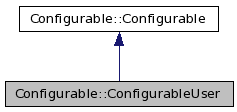
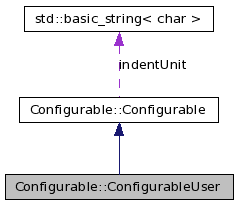
Public Member Functions | |
| def | __init__ |
| def | getGaudiType |
| def | getDlls |
| def | getHandle |
| def | __detach_used__ |
| def | propagateProperty |
| def | propagateProperties |
| def | __apply_configuration__ |
| def | applyConf |
| def | getUsedInstance |
Private Member Functions | |
| def | __addActiveUseOf |
| def | __addPassiveUseOf |
| def | _instanceName |
Private Attributes | |
| _enabled | |
| __users__ | |
| __used_instances__ | |
Static Private Attributes | |
| dictionary | __slots__ |
| list | __used_configurables__ = [] |
| list of ConfigurableUser classes this one is going to modify in the __apply_configuration__ method. | |
| list | __queried_configurables__ = [] |
| list of ConfigurableUser classes this one is going to query in the __apply_configuration__ method | |
Definition at line 1112 of file Configurable.py.
| def Configurable::ConfigurableUser::__init__ | ( | self, | |
name = Configurable.DefaultName, |
|||
_enabled = True, |
|||
| kwargs | |||
| ) |
Definition at line 1128 of file Configurable.py.
01129                                                                                     :
01130         super( ConfigurableUser, self ).__init__( name )
01131         for n, v in kwargs.items():
01132             setattr(self, n, v)
01133         self._enabled = _enabled
01134         self.__users__ = []
01135
01136         # Needed to retrieve the actual class if the declaration in __used_configurables__
01137         # and  __queried_configurables__ is done with strings.
01138         from GaudiKernel.ConfigurableDb import getConfigurable as confDbGetConfigurable
01139
01140         # Set the list of users of the used configurables
01141         #
01142         self.__used_instances__ = []
01143         for used in self.__used_configurables__:
01144             # By default we want to use the default name of the instances
01145             # for the used configurables
01146             used_name = Configurable.DefaultName
01147             # If the entry in the list is a tuple, we need a named instance
01148             if type(used) is tuple:
01149                 used, used_name = used # we re-set used to re-use the code below
01150                 if not used_name:
01151                     used_name = self._instanceName(used)
01152             # Check is 'used' is a string or not
01153             if type(used) is str:
01154                 used_class = confDbGetConfigurable(used)
01155             else:
01156                 used_class = used
01157             # Instantiate the configurable that we are going to use
01158             try:
01159                 inst = used_class(name = used_name, _enabled = False)
01160             except AttributeError:
01161                 # This cover the case where the used configurable is not a
01162                 # ConfigurableUser instance, i.e. id doesn't have the attribute
01163                 # '_enabled'.
01164                 inst = used_class(name = used_name)
01165             self.__addActiveUseOf(inst)
01166         for queried in self.__queried_configurables__:
01167             try:
01168                 if type(queried) is str:
01169                     queried = confDbGetConfigurable(used)
01170                 inst = queried(_enabled = False)
01171             except AttributeError:
01172                 inst = queried()
            self.__addPassiveUseOf(inst)
| def Configurable::ConfigurableUser::__addActiveUseOf | ( | self, | |
| other | |||
| ) | [private] |
Declare that we are going to modify the Configurable 'other' in our
__apply_configuration__.
Definition at line 1173 of file Configurable.py.
| def Configurable::ConfigurableUser::__addPassiveUseOf | ( | self, | |
| other | |||
| ) | [private] |
Declare that we are going to retrieve property values from the
ConfigurableUser 'other' in our __apply_configuration__.
Definition at line 1181 of file Configurable.py.
01182                                       :
01183         """
01184         Declare that we are going to retrieve property values from the
01185         ConfigurableUser 'other' in our __apply_configuration__.
01186         """
01187         if not isinstance(other, ConfigurableUser):
01188             raise Error("'%s': Cannot make passive use of '%s', it is not a ConfigurableUser" % (self.name(), other.name()))
        other.__addActiveUseOf(self)
| def Configurable::ConfigurableUser::__apply_configuration__ | ( | self ) |
Function to be overridden to convert the high level configuration into a
low level one.
The default implementation calls applyConf, which is the method defined
in some ConfigurableUser implementations.
Definition at line 1265 of file Configurable.py.
| def Configurable::ConfigurableUser::__detach_used__ | ( | self ) |
Remove this ConfigurableUser instance from the users list of the used
instances.
Definition at line 1196 of file Configurable.py.
| def Configurable::ConfigurableUser::_instanceName | ( | self, | |
| cls | |||
| ) | [private] |
Function used to define the name of the private instance of a given class
name.
This method is used when the __used_configurables_property__ declares the
need of a private used configurable without specifying the name.
Definition at line 1281 of file Configurable.py.
01282                                 :
01283         """
01284         Function used to define the name of the private instance of a given class
01285         name.
01286         This method is used when the __used_configurables_property__ declares the
01287         need of a private used configurable without specifying the name.
01288         """
01289         if type(cls) is str:
01290             clName = cls
01291         else:
01292             clName = cls.__name__
01293         return "%s_%s" % (self.name(), clName)
| def Configurable::ConfigurableUser::applyConf | ( | self ) |
Function to be overridden to convert the high level configuration into a
low level one.
Definition at line 1274 of file Configurable.py.
| def Configurable::ConfigurableUser::getDlls | ( | self ) |
Definition at line 1191 of file Configurable.py.
| def Configurable::ConfigurableUser::getGaudiType | ( | self ) |
Definition at line 1189 of file Configurable.py.
| def Configurable::ConfigurableUser::getHandle | ( | self ) |
Definition at line 1193 of file Configurable.py.
| def Configurable::ConfigurableUser::getUsedInstance | ( | self, | |
| name | |||
| ) |
Return the used instance with a given name.
Definition at line 1294 of file Configurable.py.
01295                                    :
01296         """
01297         Return the used instance with a given name.
01298         """
01299         for i in self.__used_instances__:
01300             if i.name() == name:
01301                 if hasattr(i, "_enabled"):
01302                     # ensure that the instances retrieved through the method are
01303                     # enabled
01304                     i._enabled = True
01305                 return i
01306         raise KeyError(name)
01307
# list of callables to be called after all the __apply_configuration__ are called.
| def Configurable::ConfigurableUser::propagateProperties | ( | self, | |
names = None, |
|||
others = None, |
|||
force = True |
|||
| ) |
Call propagateProperty for each property listed in 'names'.
If 'names' is None, all the properties are propagated.
Definition at line 1254 of file Configurable.py.
01255                                                                             :
01256         """
01257         Call propagateProperty for each property listed in 'names'.
01258         If 'names' is None, all the properties are propagated.
01259         """
01260         if names is None:
01261             # use all the non-private slots
01262             names = [ p for p in self.__slots__ if not p.startswith("_") ]
01263         for n in names:
01264             self.propagateProperty(n, others, force)
| def Configurable::ConfigurableUser::propagateProperty | ( | self, | |
| name, | |||
others = None, |
|||
force = True |
|||
| ) |
Propagate the property 'name' (if set) to other configurables (if possible).
'others' can be:
    None:
propagate to all the entries in __used_configurables__
    a configurable instance:
propagate only to it
    list of configurable instances:
propagate to all of them.


The logic is:
- if the local property is set, the other property will be overwritten
- local property not set and other set => keep other
- local property not set and other not set => overwrite the default for
    ConfigurableUser instances and set the property for Configurables
Definition at line 1205 of file Configurable.py.
01206                                                                   :
01207         """
01208         Propagate the property 'name' (if set) to other configurables (if possible).
01209         'others' can be:
01210             None:
01211                 propagate to all the entries in __used_configurables__
01212             a configurable instance:
01213                 propagate only to it
01214             list of configurable instances:
01215                 propagate to all of them.
01216
01217
01218         The logic is:
01219         - if the local property is set, the other property will be overwritten
01220         - local property not set and other set => keep other
01221         - local property not set and other not set => overwrite the default for
01222             ConfigurableUser instances and set the property for Configurables
01223         """
01224         # transform 'others' to a list of configurable instances
01225         if others is None:
01226             others = self.__used_instances__
01227         elif type(others) not in [ list, tuple ] :
01228             others = [ others ]
01229         # these can be computed before the loop
01230         local_is_set = self.isPropertySet(name)
01231         value = self.getProp(name)
01232         # loop over the others that do have 'name' in their slots
01233         for other in [ o for o in others if name in o.__slots__ ]:
01234             # If self property is set, use it
01235             if local_is_set:
01236                 if other.isPropertySet(name):
01237                     log.warning("Property '%(prop)s' is set in both '%(self)s' and '%(other)s', using '%(self)s.%(prop)s'"%
01238                                 { "self": self.name(),
01239                                   "other": other.name(),
01240                                   "prop": name } )
01241                 other.setProp(name, value)
01242             # If not, and other property also not set, propagate the default
01243             elif not other.isPropertySet(name):
01244                 if isinstance(other,ConfigurableUser):
01245                     otherType = type(other._properties[name].getDefault())
01246                     other._properties[name].setDefault(value)
01247                     if otherType in [list, dict]:
01248                         # Special case for list and dictionaries:
01249                         # also set the property to the same value of the default (copy)
01250                         other.setProp(name, otherType(value))
01251                 else:
01252                     other.setProp(name, value)
01253             # If not set and other set, do nothing
list Configurable::ConfigurableUser::__queried_configurables__ = [] [static, private] |
list of ConfigurableUser classes this one is going to query in the __apply_configuration__ method
Definition at line 1127 of file Configurable.py.
dictionary Configurable::ConfigurableUser::__slots__ [static, private] |
{ "__users__": [],
                  "__used_instances__": [],
                  "_enabled": True }
Reimplemented from Configurable::Configurable.
Definition at line 1113 of file Configurable.py.
list Configurable::ConfigurableUser::__used_configurables__ = [] [static, private] |
list of ConfigurableUser classes this one is going to modify in the __apply_configuration__ method.
The list may contain class objects, strings representing class objects or tuples with the class object (or a string) as first element and the instance name as second element. If the instance name is None or not present, the function _instanceName() is used to determine the name of the instance (the default implementation returns "<this name>_<other name>".
Definition at line 1124 of file Configurable.py.
Definition at line 1128 of file Configurable.py.
Definition at line 1128 of file Configurable.py.
Configurable::ConfigurableUser::_enabled [private] |
Definition at line 1128 of file Configurable.py.

