
|
Gaudi Framework, version v23r2 |
| Home | Generated: Thu Jun 28 2012 |
|
|
Gaudi Framework, version v23r2 |
| Home | Generated: Thu Jun 28 2012 |
#include <IoComponentMgr.h>
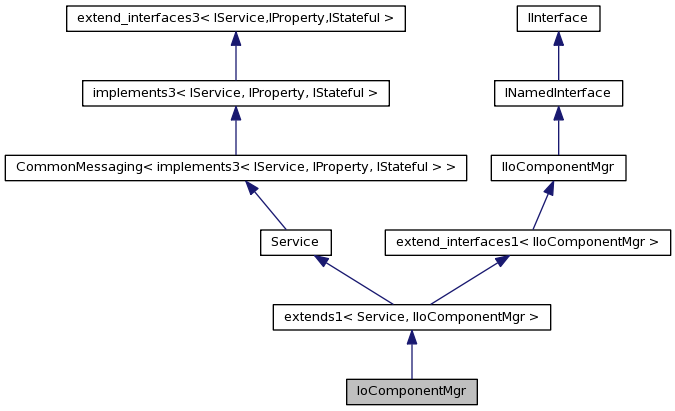
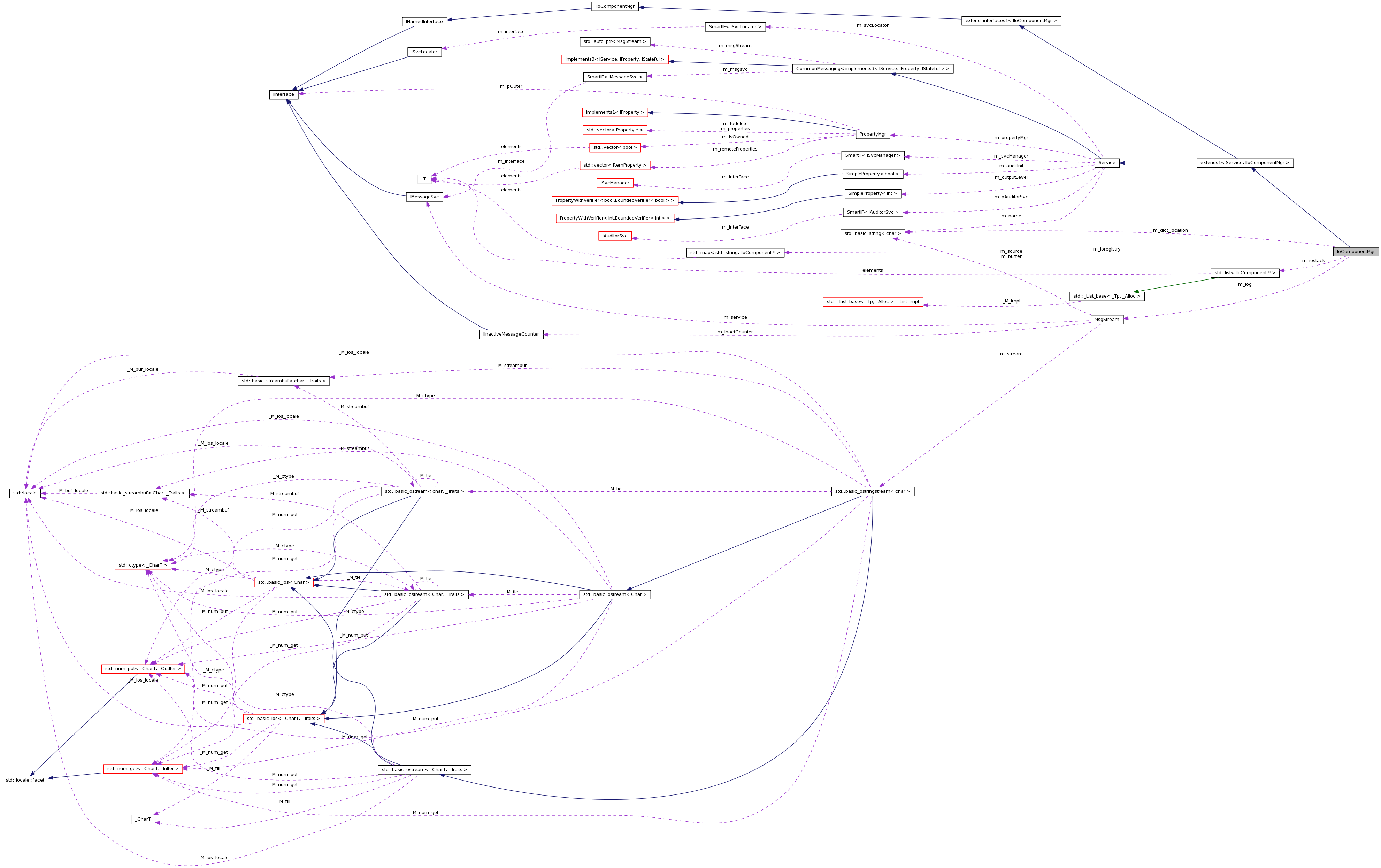
Public Member Functions | |
| IoComponentMgr (const std::string &name, ISvcLocator *pSvcLocator) | |
| Constructor with parameters: | |
| virtual | ~IoComponentMgr () |
| Destructor: | |
| virtual bool | io_hasitem (IIoComponent *iocomponent) const |
: check if the registry contains a given IIoComponent | |
| virtual bool | io_contains (IIoComponent *iocomponent, const std::string &fname) const |
: check if the registry contains a given IIoComponent and that component had | |
| virtual StatusCode | io_register (IIoComponent *iocomponent) |
: allow a IIoComponent to register itself with this manager so appropriate actions can be taken when e.g. | |
| virtual StatusCode | io_register (IIoComponent *iocomponent, IIoComponentMgr::IoMode::Type iomode, const std::string &fname) |
: allow a IIoComponent to register itself with this manager so appropriate actions can be taken when e.g. | |
| virtual StatusCode | io_retrieve (IIoComponent *iocomponent, std::string &fname) |
: retrieve the new filename for a given IIoComponent and | |
| virtual StatusCode | io_reinitialize () |
| : reinitialize the I/O subsystem. | |
| virtual StatusCode | io_finalize () |
| : finalize the I/O subsystem. | |
| virtual StatusCode | initialize () |
| Gaudi Service Implementation. | |
| virtual StatusCode | finalize () |
Private Types | |
| typedef std::map< std::string, IIoComponent * > | IoRegistry_t |
| typedef std::list< IIoComponent * > | IoStack_t |
Private Member Functions | |
| IoComponentMgr () | |
| Default constructor: | |
Private Attributes | |
| MsgStream | m_log |
| IoRegistry_t | m_ioregistry |
Registry of IIoComponents. | |
| IoStack_t | m_iostack |
Stack of IIoComponents to properly handle order of registration. | |
| PyObject * | m_dict |
| pointer to a python dictionary holding the associations: { 'iocomp-name' : { 'oldfname' : [ 'iomode', 'newfname' ] } } | |
| std::string | m_dict_location |
| location of the python dictionary | |
Friends | |
| class | SvcFactory< IoComponentMgr > |
Definition at line 29 of file IoComponentMgr.h.
typedef std::map<std::string, IIoComponent*> IoComponentMgr::IoRegistry_t [private] |
Definition at line 127 of file IoComponentMgr.h.
typedef std::list<IIoComponent*> IoComponentMgr::IoStack_t [private] |
Definition at line 131 of file IoComponentMgr.h.
| IoComponentMgr::IoComponentMgr | ( | const std::string & | name, |
| ISvcLocator * | pSvcLocator | ||
| ) |
Constructor with parameters:
Definition at line 29 of file IoComponentMgr.cpp.
: base_class(name,svc), m_log(msgSvc(), name ),
    m_dict   ( 0 )
{
  //
  // Property declaration
  //
  //declareProperty( "Property", m_nProperty );

//   declareProperty ("Registry",
//                 m_dict_location = "GaudiMP.IoRegistry.registry",
//                 "Location of the python dictionary holding the "
//                 "associations: \n"
//                 " {component-name:{ 'old-fname' : ['io','new-fname'] }}\n"
//                 "\nSyntax: <python-module>.<python-module>.<fct-name> \n"
//                 " where fct-name is a function returning the wanted "
//                 " dictionary.");
}
| IoComponentMgr::~IoComponentMgr | ( | ) | [virtual] |
| IoComponentMgr::IoComponentMgr | ( | ) | [private] |
Default constructor:
| StatusCode IoComponentMgr::finalize | ( | ) | [virtual] |
Reimplemented from Service.
Definition at line 134 of file IoComponentMgr.cpp.
{
  m_log << MSG::INFO << "Finalizing " << name() << "..." << endmsg;


  if (m_log.level() <= MSG::DEBUG) {
    m_log << MSG::DEBUG << "Listing all monitored entries: " << std::endl;

    std::string repr = "";
    // PyObject_Repr returns a new ref.
    PyObject* py_repr = PyObject_Repr (m_dict);
    if ( py_repr && PyString_Check(py_repr) ) {
      repr = PyString_AsString(py_repr);
    }
    Py_XDECREF( py_repr );
    m_log << MSG::DEBUG << "content: " << repr << endmsg;
  }

  return StatusCode::SUCCESS;
}
| StatusCode IoComponentMgr::initialize | ( | ) | [virtual] |
Reimplemented from Service.
Definition at line 58 of file IoComponentMgr.cpp.
{
  m_log << MSG::INFO << "Initializing " << name() << "..." << endmsg;

  if ( Service::initialize().isFailure() ) {
    m_log << MSG::ERROR << "Unable to initialize Service base class" << endmsg;
    return StatusCode::FAILURE;
  }
  m_log.setLevel( m_outputLevel.value() );

  if ( ! Py_IsInitialized() ) {
    if (m_log.level() <= MSG::DEBUG) {
      m_log << MSG::DEBUG << "Initializing Python" << endmsg;
    }
    PyEval_InitThreads();
    Py_Initialize();

    if ( ! Py_IsInitialized() ) {
      m_log << MSG::ERROR << "Unable to initialize Python" << endmsg;
      return StatusCode::FAILURE;
    }
  }


  // retrieve the python dictionary holding the I/O registry
  const std::string py_module_name = "GaudiMP.IoRegistry";
  m_log << MSG::DEBUG << "importing module [" << py_module_name << "]..."
        << endmsg;
  PyObject *module = PyImport_ImportModule ((char*)py_module_name.c_str());
  if ( !module || !PyModule_Check (module) ) {
    m_log << MSG::ERROR << "Could not import [" << py_module_name << "] !"
          << endmsg;
    Py_XDECREF (module);
    return StatusCode::FAILURE;
  }

  const std::string py_class_name = "IoRegistry";
  PyObject *pyclass = PyDict_GetItemString (PyModule_GetDict(module),
                                            (char*)py_class_name.c_str());
  // borrowed ref.
  Py_XINCREF (pyclass);
  if ( !pyclass ) {
    m_log << MSG::ERROR << "Could not import ["
          << py_class_name << "] from module ["
          << py_module_name << "] !"
          << endmsg ;
    Py_XDECREF (pyclass);
    Py_DECREF  (module);
    return StatusCode::FAILURE;
  }

  m_dict = PyObject_GetAttrString (pyclass, (char*)"instances");
  if ( !m_dict || !PyDict_Check (m_dict) ) {
    m_log << MSG::ERROR
          << "could not retrieve attribute [instances] from class ["
          << py_module_name << "." << py_class_name << "] !" << endmsg;
    Py_DECREF (pyclass);
    Py_DECREF (module);
    return StatusCode::FAILURE;
  }

  m_log << MSG::INFO <<  "python I/O registry retrieved [ok]" << endmsg;
  if ( m_log.level() <=  MSG::DEBUG ) {
    std::string repr = "";
    // PyObject_Repr returns a new ref.
    PyObject* py_repr = PyObject_Repr (m_dict);
    if ( py_repr && PyString_Check(py_repr) ) {
      repr = PyString_AsString(py_repr);
    }
    Py_XDECREF( py_repr );
    m_log << MSG::DEBUG << "content: " << repr << endmsg;
  }

  return StatusCode::SUCCESS;
}
| bool IoComponentMgr::io_contains | ( | IIoComponent * | iocomponent, |
| const std::string & | fname | ||
| ) | const [virtual] |
: check if the registry contains a given IIoComponent and that component had
| `fname` | as a filename |
Implements IIoComponentMgr.
Definition at line 176 of file IoComponentMgr.cpp.
{
  if ( 0 == iocomponent ) {
    return false;
  }
  const std::string& ioname = iocomponent->name();

  // m_dict is a python dictionary like so:
  //  { 'iocomp-name' : { 'oldfname' : [ 'iomode', 'newfname' ] } }

  // -> check there is an 'iocomp-name' entry
  // -> retrieve that entry
  PyObject *o = PyDict_GetItemString (m_dict, (char*)ioname.c_str());
  Py_XINCREF (o);

  // -> check it is a dictionary
  if ( NULL==o || !PyDict_Check (o) ) {
    Py_XDECREF (o);

    return false;
  }

  // -> check 'oldfname' exists
  PyObject *item = PyDict_GetItemString (o, (char*)fname.c_str());

  const bool contains = (item != 0);
  if ( contains == false ) {
    std::string repr = "";
    // PyObject_Repr returns a new ref.
    PyObject* py_repr = PyObject_Repr (o);
    if ( py_repr && PyString_Check(py_repr) ) {
      repr = PyString_AsString(py_repr);
    }
    Py_XDECREF( py_repr );
    m_log << MSG::ERROR << "content: " << repr << endmsg;
  }
  Py_DECREF (o);
  Py_XDECREF(item);
  return contains;
}
| StatusCode IoComponentMgr::io_finalize | ( | ) | [virtual] |
: finalize the I/O subsystem.
Hook to allow to e.g. give a chance to I/O subsystems to merge output files. Not sure how to do this correctly though...
Implements IIoComponentMgr.
Definition at line 452 of file IoComponentMgr.cpp.
{
  return StatusCode::SUCCESS;
}
| bool IoComponentMgr::io_hasitem | ( | IIoComponent * | iocomponent ) | const [virtual] |
: check if the registry contains a given IIoComponent
Implements IIoComponentMgr.
Definition at line 162 of file IoComponentMgr.cpp.
{
  if ( 0 == iocomponent ) {
    return false;
  }
  const std::string& ioname = iocomponent->name();
  IoRegistry_t::const_iterator io = m_ioregistry.find (ioname);
  return io != m_ioregistry.end();
}
| StatusCode IoComponentMgr::io_register | ( | IIoComponent * | iocomponent ) | [virtual] |
: allow a IIoComponent to register itself with this manager so appropriate actions can be taken when e.g.
a fork(2) has been issued (this is usually handled by calling IIoComponent::io_reinit on every registered component)
Implements IIoComponentMgr.
Definition at line 229 of file IoComponentMgr.cpp.
{
  if ( 0 == iocomponent ) {
    m_log << MSG::ERROR
          << "io_register (component) received a NULL pointer !" << endmsg;
    return StatusCode::FAILURE;
  }
  const std::string& ioname = iocomponent->name();
  IoRegistry_t::iterator itr = m_ioregistry.find (ioname);
  if ( itr == m_ioregistry.end() ) {
    iocomponent->addRef(); // ownership...
    m_ioregistry[ioname] = iocomponent;
    m_iostack.push_back (iocomponent);
  } else {
    m_log << MSG::INFO << "IoComponent[" << iocomponent->name()
          <<"] already registered @" << (void*)itr->second << endmsg;
  }
  return StatusCode::SUCCESS;
}
| StatusCode IoComponentMgr::io_register | ( | IIoComponent * | iocomponent, |
| IIoComponentMgr::IoMode::Type | iomode, | ||
| const std::string & | fname | ||
| ) | [virtual] |
: allow a IIoComponent to register itself with this manager so appropriate actions can be taken when e.g.
a fork(2) has been issued (this is usually handled by calling IIoComponent::io_reinit on every registered component)
Implements IIoComponentMgr.
Definition at line 256 of file IoComponentMgr.cpp.
{
  if ( 0 == iocomponent ) {
    return StatusCode::FAILURE;
  }
  const std::string& ioname = iocomponent->name();

  if ( !io_hasitem (iocomponent) ) {
    if ( !io_register (iocomponent).isSuccess() ) {
      m_log << MSG::ERROR
            << "could not register component [" << iocomponent->name() << "] "
            << "with the I/O component manager !"
            << endmsg;
      return StatusCode::FAILURE;
    }
  }

  // m_dict is a python dictionary like so:
  //  { 'iocomp-name' : { 'oldfname' : [ 'iomode', 'newfname' ] } }

  // -> check there is an 'iocomp-name' entry
  // -> retrieve that entry
  PyObject *o = PyDict_GetItemString (m_dict, (char*)ioname.c_str());

  // -> check it is a dictionary
  if ( NULL==o ) {
    o = PyDict_New();
    if (NULL == o) {
      m_log << MSG::ERROR << "could not create an I/O entry for ["
            << ioname << "] "
            << "in the I/O registry !" << endmsg;
      return StatusCode::FAILURE;
    }
    if ( 0 != PyDict_SetItemString (m_dict, (char*)ioname.c_str(), o) ) {
      Py_DECREF (o);
      m_log << MSG::ERROR << "could not create an I/O entry for ["
            << ioname << "] " << "in the I/O registry !" << endmsg;
      return StatusCode::FAILURE;
    }
  } else if ( !PyDict_Check (o) ) {
    m_log << MSG::ERROR
          << "internal consistency error (expected a dictionary !)"
          << endmsg;
    return StatusCode::FAILURE;
  } else {
    // borrowed ref.
    Py_INCREF (o);
  }

  // -> check if 'fname' has already been registered
  std::string mode;
  switch (iomode) {
  case IIoComponentMgr::IoMode::Input: mode ="<input>"; break;
  case IIoComponentMgr::IoMode::Output:mode ="<output>";break;
  default:
    m_log << MSG::ERROR << "unknown value for iomode: [" << iomode << "] !"
          << endmsg;
    Py_DECREF (o);
    return StatusCode::FAILURE;
  }

  PyObject *val = PyDict_GetItemString (o, (char*)fname.c_str());
  if ( 0 != val ) {
    Py_DECREF (o);
    return StatusCode::SUCCESS;
  }

  val = PyList_New(2);
  if ( 0 == val ) {
    m_log << MSG::ERROR << "could not allocate a python-list !" << endmsg;
    Py_DECREF (o);
    return StatusCode::FAILURE;
  }

  int err = PyList_SetItem (val,
                            0, PyString_FromString ((char*)mode.c_str()));
  if (err) {
    Py_DECREF (val);
    Py_DECREF (o);
    m_log << MSG::ERROR << "could not set py-iomode !" << endmsg;
    return StatusCode::FAILURE;
  }
  Py_INCREF (Py_None);
  // PyList_SetItem steals the ref...
  err = PyList_SetItem (val, 1, Py_None);
  if (err) {
    Py_DECREF (val);
    Py_DECREF (o);
    m_log << MSG::ERROR << "could not properly fill python-list !" << endmsg;
    return StatusCode::FAILURE;
  }
  err = PyDict_SetItemString (o, (char*)fname.c_str(), val);
  if (err) {
    m_log << MSG::ERROR << "could not properly fill registry w/ python-list !"
          << endmsg;
    Py_DECREF (val);
    Py_DECREF (o);
    return StatusCode::FAILURE;
  }
  Py_DECREF (o);
  return StatusCode::SUCCESS;
}
| StatusCode IoComponentMgr::io_reinitialize | ( | ) | [virtual] |
: reinitialize the I/O subsystem.
This effectively calls IIoComponent::io_reinit on all the registered IIoComponent.
Implements IIoComponentMgr.
Definition at line 419 of file IoComponentMgr.cpp.
{
  m_log << MSG::DEBUG << "reinitializing I/O subsystem..." << endmsg;
  bool allgood = true;
  for ( IoStack_t::iterator io = m_iostack.begin(), ioEnd = m_iostack.end();
        io != ioEnd;
        ++io ) {
    m_log << MSG::DEBUG << " [" << (*io)->name() << "]->io_reinit()..."
          << endmsg;
    if ( !(*io)->io_reinit().isSuccess() ) {
      allgood = false;
      m_log << MSG::ERROR << "problem in [" << (*io)->name()
            << "]->io_reinit() !" << endmsg;
    }
    // we are done with this guy... release it
    (*io)->release();
  }

  // we are done.
  // FIXME: shall we allow for multiple io_reinitialize ?
  m_iostack.clear();
  m_ioregistry.clear();

  return allgood
    ? StatusCode::SUCCESS
    : StatusCode::FAILURE;
}
| StatusCode IoComponentMgr::io_retrieve | ( | IIoComponent * | iocomponent, |
| std::string & | fname | ||
| ) | [virtual] |
: retrieve the new filename for a given IIoComponent and
| `fname` | filename |
| `oldfname` | filename |
Implements IIoComponentMgr.
Definition at line 365 of file IoComponentMgr.cpp.
{
  if ( 0 == iocomponent ) {
    return StatusCode::FAILURE;
  }

  const std::string& ioname = iocomponent->name();

  // m_dict is a python dictionary like so:
  //  { 'iocomp-name' : { 'oldfname' : [ 'iomode', 'newfname' ] } }

  // -> check there is an 'iocomp-name' entry
  // -> retrieve that entry
  PyObject *o = PyDict_GetItemString (m_dict, (char*)ioname.c_str());
  Py_XINCREF (o);

  // -> check it is a dictionary
  if ( NULL==o || !PyDict_Check (o) ) {
    Py_XDECREF (o);
    return StatusCode::FAILURE;
  }

  // -> check 'oldfname' exists
  PyObject *pylist = PyDict_GetItemString (o, (char*)fname.c_str());
  Py_XINCREF (pylist);

  if ( NULL==pylist || !PyList_Check (pylist) ) {
    Py_XDECREF(pylist);
    Py_DECREF (o);
    return StatusCode::FAILURE;
  }

  const std::size_t sz = PyList_Size (pylist);
  if ( 2 != sz ) {
    m_log << MSG::ERROR << "[" << ioname << "][" << fname << "] list has size ["
          << sz << " ! (expected sz==2)"
          << endmsg;
    Py_DECREF (o);
    Py_DECREF (pylist);
    return StatusCode::FAILURE;
  }

  fname = PyString_AsString ( PyList_GetItem (pylist, 1) );
  Py_DECREF (o);
  Py_DECREF (pylist);
  return StatusCode::SUCCESS;
}
friend class SvcFactory< IoComponentMgr > [friend] |
Definition at line 31 of file IoComponentMgr.h.
PyObject* IoComponentMgr::m_dict [private] |
pointer to a python dictionary holding the associations: { 'iocomp-name' : { 'oldfname' : [ 'iomode', 'newfname' ] } }
Definition at line 138 of file IoComponentMgr.h.
std::string IoComponentMgr::m_dict_location [private] |
location of the python dictionary
Definition at line 141 of file IoComponentMgr.h.
IoRegistry_t IoComponentMgr::m_ioregistry [private] |
Registry of IIoComponents.
Definition at line 129 of file IoComponentMgr.h.
IoStack_t IoComponentMgr::m_iostack [private] |
Stack of IIoComponents to properly handle order of registration.
Definition at line 133 of file IoComponentMgr.h.
MsgStream IoComponentMgr::m_log [mutable, private] |
Definition at line 125 of file IoComponentMgr.h.

