All Classes Namespaces Files Functions Variables Typedefs Enumerations Enumerator Properties Friends Macros Groups Pages
PerfMonAuditor Class Reference

Performance Monitoring Auditor that uses Perfmon2 library to monitor algorithms. More...
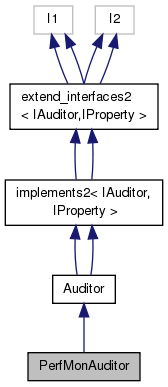
Inheritance diagram for PerfMonAuditor:
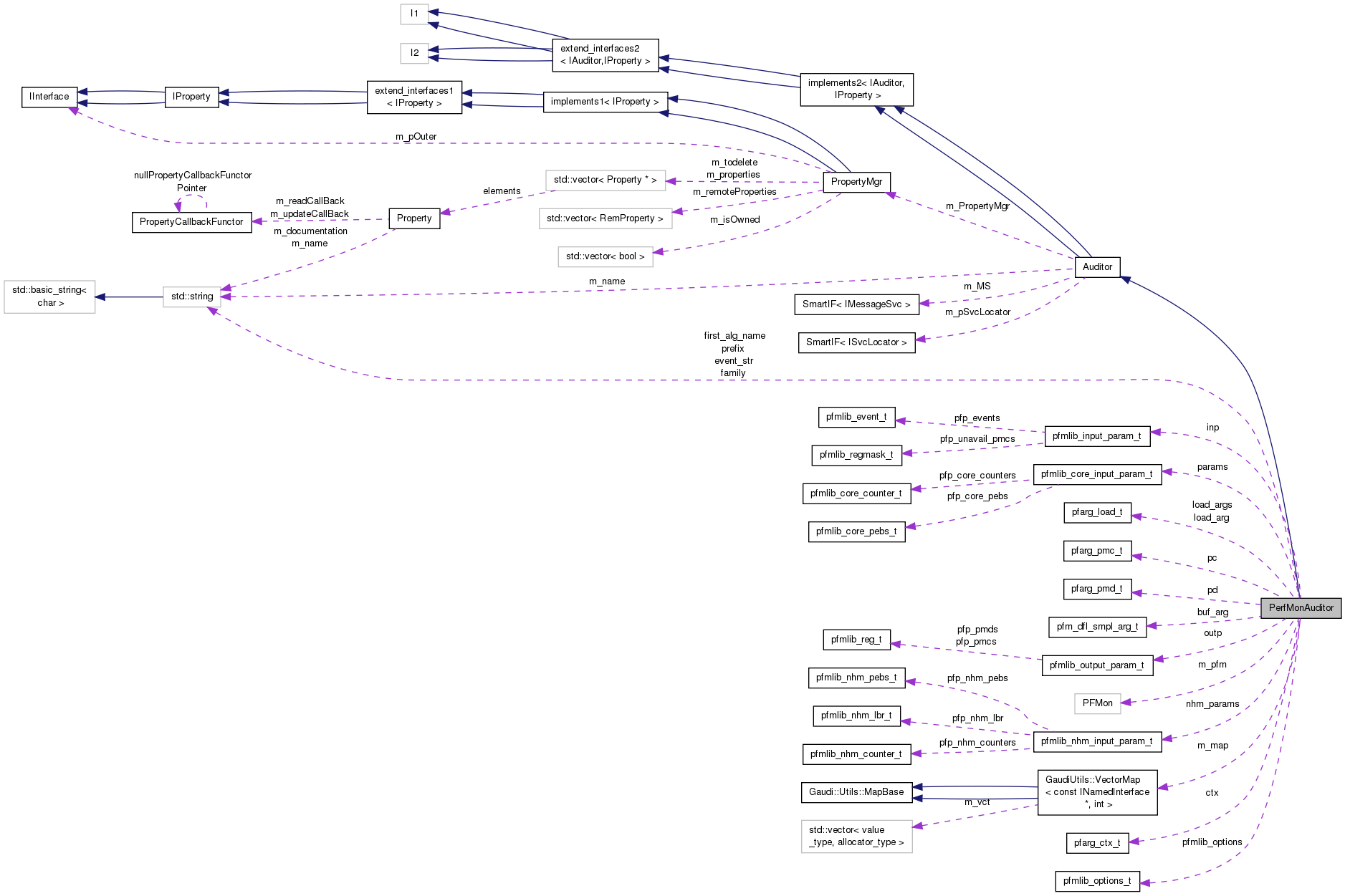
Collaboration diagram for PerfMonAuditor:

Public Member Functions

virtual void before (StandardEventType evt, INamedInterface *alg)
 The following methods are meant to be implemented by the child class...
 
virtual void after (StandardEventType evt, INamedInterface *alg, const StatusCode &sc)
 
virtual StatusCode initialize ()
 
virtual StatusCode finalize ()
 
int is_nehalem ()
 
 PerfMonAuditor (const std::string &name, ISvcLocator *pSvc)
 
virtual ~PerfMonAuditor ()
 
- Public Member Functions inherited from Auditor
 Auditor (const std::string &name, ISvcLocator *svcloc)
 Constructor.
 
virtual ~Auditor ()
 Destructor.
 
StatusCode sysInitialize ()
 Initialization method invoked by the framework.
 
StatusCode sysFinalize ()
 Finalization method invoked by the framework.
 
virtual void before (StandardEventType, const std::string &)
 
virtual void before (CustomEventTypeRef, INamedInterface *)
 
virtual void before (CustomEventTypeRef, const std::string &)
 
virtual void after (StandardEventType, const std::string &, const StatusCode &)
 
virtual void after (CustomEventTypeRef, INamedInterface *, const StatusCode &)
 
virtual void after (CustomEventTypeRef, const std::string &, const StatusCode &)
 
virtual void beforeInitialize (INamedInterface *)
 
virtual void afterInitialize (INamedInterface *)
 
virtual void beforeReinitialize (INamedInterface *)
 
virtual void afterReinitialize (INamedInterface *)
 
virtual void beforeExecute (INamedInterface *)
 
virtual void afterExecute (INamedInterface *, const StatusCode &)
 
virtual void beforeFinalize (INamedInterface *)
 
virtual void afterFinalize (INamedInterface *)
 
virtual void beforeBeginRun (INamedInterface *)
 
virtual void afterBeginRun (INamedInterface *)
 
virtual void beforeEndRun (INamedInterface *)
 
virtual void afterEndRun (INamedInterface *)
 
virtual const std::string & name () const
 
virtual bool isEnabled () const
 
SmartIF< IMessageSvc > & msgSvc () const
 The standard message service.
 
int outputLevel () const
 Retrieve the output level of current auditor.
 
void setOutputLevel (int level)
 Set the output level for current auditor.
 
SmartIF< ISvcLocator > & serviceLocator () const
 The standard service locator.
 
template<class T >
StatusCode service (const std::string &name, T *&svc, bool createIf=false) const
 Access a service by name, creating it if it doesn't already exist.
 
virtual StatusCode setProperty (const Property &p)
 Set a value of a property of an auditor.
 
virtual StatusCode setProperty (const std::string &s)
 Implementation of IProperty::setProperty.
 
virtual StatusCode setProperty (const std::string &n, const std::string &v)
 Implementation of IProperty::setProperty.
 
virtual StatusCode getProperty (Property *p) const
 Get the value of a property.
 
virtual const PropertygetProperty (const std::string &name) const
 Get the property by name.
 
virtual StatusCode getProperty (const std::string &n, std::string &v) const
 Implementation of IProperty::getProperty.
 
const std::vector< Property * > & getProperties () const
 Get all properties.
 
template<class TYPE >
StatusCode setProperty (const std::string &name, const TYPE &value)
 set the property form the value
 
StatusCode setProperties ()
 Set the auditor's properties.
 
template<class T >
PropertydeclareProperty (const std::string &name, T &property, const std::string &doc="none") const
 Declare the named property.
 
 Auditor (const std::string &name, ISvcLocator *svcloc)
 Constructor.
 
virtual ~Auditor ()
 Destructor.
 
StatusCode sysInitialize ()
 Initialization method invoked by the framework.
 
StatusCode sysFinalize ()
 Finalization method invoked by the framework.
 
virtual void before (StandardEventType, const std::string &)
 
virtual void before (CustomEventTypeRef, INamedInterface *)
 
virtual void before (CustomEventTypeRef, const std::string &)
 
virtual void after (StandardEventType, const std::string &, const StatusCode &)
 
virtual void after (CustomEventTypeRef, INamedInterface *, const StatusCode &)
 
virtual void after (CustomEventTypeRef, const std::string &, const StatusCode &)
 
virtual void beforeInitialize (INamedInterface *)
 
virtual void afterInitialize (INamedInterface *)
 
virtual void beforeReinitialize (INamedInterface *)
 
virtual void afterReinitialize (INamedInterface *)
 
virtual void beforeExecute (INamedInterface *)
 
virtual void afterExecute (INamedInterface *, const StatusCode &)
 
virtual void beforeFinalize (INamedInterface *)
 
virtual void afterFinalize (INamedInterface *)
 
virtual void beforeBeginRun (INamedInterface *)
 
virtual void afterBeginRun (INamedInterface *)
 
virtual void beforeEndRun (INamedInterface *)
 
virtual void afterEndRun (INamedInterface *)
 
virtual const std::string & name () const
 
virtual bool isEnabled () const
 
SmartIF< IMessageSvc > & msgSvc () const
 The standard message service.
 
int outputLevel () const
 Retrieve the output level of current auditor.
 
void setOutputLevel (int level)
 Set the output level for current auditor.
 
SmartIF< ISvcLocator > & serviceLocator () const
 The standard service locator.
 
template<class T >
StatusCode service (const std::string &name, T *&svc, bool createIf=false) const
 Access a service by name, creating it if it doesn't already exist.
 
virtual StatusCode setProperty (const Property &p)
 Set a value of a property of an auditor.
 
virtual StatusCode setProperty (const std::string &s)
 Implementation of IProperty::setProperty.
 
virtual StatusCode setProperty (const std::string &n, const std::string &v)
 Implementation of IProperty::setProperty.
 
virtual StatusCode getProperty (Property *p) const
 Get the value of a property.
 
virtual const PropertygetProperty (const std::string &name) const
 Get the property by name.
 
virtual StatusCode getProperty (const std::string &n, std::string &v) const
 Implementation of IProperty::getProperty.
 
const std::vector< Property * > & getProperties () const
 Get all properties.
 
template<class TYPE >
StatusCode setProperty (const std::string &name, const TYPE &value)
 set the property form the value
 
StatusCode setProperties ()
 Set the auditor's properties.
 
template<class T >
PropertydeclareProperty (const std::string &name, T &property, const std::string &doc="none") const
 Declare the named property.
 

Private Types

typedef GaudiUtils::VectorMap
< const INamedInterface *, int > 
Map
 

Private Member Functions

void i_beforeInitialize (INamedInterface *alg)
 
void i_afterInitialize (INamedInterface *alg)
 
void i_beforeExecute (INamedInterface *alg)
 
void i_afterExecute (INamedInterface *alg)
 
 PerfMonAuditor ()
 
 PerfMonAuditor (const PerfMonAuditor &)
 
PerfMonAuditoroperator= (const PerfMonAuditor &)
 
void startpm ()
 
void pausepm ()
 
void stoppm ()
 
void finalizepm ()
 
int detect_unavail_pmu_regs (int fd, pfmlib_regmask_t *r_pmcs, pfmlib_regmask_t *r_pmds)
 
int detect_unavail_pmcs (int fd, pfmlib_regmask_t *r_pmcs)
 
void pfm_bv_set (uint64_t *bv, uint16_t rnum)
 
int pfm_bv_isset (uint64_t *bv, uint16_t rnum)
 
void pfm_bv_copy (uint64_t *d, uint64_t *j, uint16_t n)
 
void start_smpl ()
 
void stop_smpl ()
 
void finalize_smpl ()
 

Static Private Member Functions

static void process_smpl_buf (pfm_dfl_smpl_hdr_t *hdr, size_t entry_size)
 
static void sigio_handler (int, struct siginfo *, struct sigcontext *)
 

Private Attributes

PFMon & m_pfm
 
Map m_map
 
int m_indent
 
bool m_inEvent
 
int is_nehalem_ret
 
pfmlib_input_param_t inp
 
pfmlib_output_param_t outp
 
pfarg_ctx_t ctx
 
pfarg_pmd_t pd [NUM_PMDS]
 
pfarg_pmc_t pc [NUM_PMCS]
 
pfarg_load_t load_arg
 
int fd
 
unsigned int i
 
int ret
 
std::string event_str [MAX_NUMBER_OF_PROGRAMMABLE_COUNTERS]
 
std::string prefix
 
std::string family
 
char event_cstr [MAX_NUMBER_OF_PROGRAMMABLE_COUNTERS][MAX_EVENT_NAME_LENGTH]
 
char prefix_cstr [MAX_PREFIX_NAME_LENGTH]
 
unsigned int ph_ev_count
 
bool inv [MAX_NUMBER_OF_PROGRAMMABLE_COUNTERS]
 
unsigned int cmask [MAX_NUMBER_OF_PROGRAMMABLE_COUNTERS]
 
unsigned int start_at_event
 
pfmlib_core_input_param_t params
 
pfmlib_nhm_input_param_t nhm_params
 
int used_counters_number
 
bool nehalem
 
bool westmere
 
bool core
 
bool sampling
 
pfm_dfl_smpl_arg_t buf_arg
 
pfarg_load_t load_args
 
void * buf_addr
 
unsigned num_counters
 
unsigned int max_pmd
 
pfmlib_options_t pfmlib_options
 
int level
 
bool first_alg
 
std::string first_alg_name
 
bool event_count_reached
 

Additional Inherited Members

- Public Types inherited from Auditor
typedef
Gaudi::PluginService::Factory
< IAuditor *, const
std::string &, ISvcLocator * > 
Factory
 
typedef
Gaudi::PluginService::Factory
< IAuditor *, const
std::string &, ISvcLocator * > 
Factory
 

Detailed Description

Performance Monitoring Auditor that uses Perfmon2 library to monitor algorithms.

Author
Daniele Francesco KRUSE danie.nosp@m.le.f.nosp@m.rance.nosp@m.sco..nosp@m.kruse.nosp@m.@cer.nosp@m.n.ch
Date
2009-10-28

Definition at line 200 of file PerfMonAuditor.cpp.

Member Typedef Documentation

Definition at line 354 of file PerfMonAuditor.cpp.

Constructor & Destructor Documentation

PerfMonAuditor::PerfMonAuditor ( const std::string &  name,
ISvcLocator pSvc 
)
inline

Definition at line 272 of file PerfMonAuditor.cpp.

: // standard constructor
Auditor(name, pSvc),
m_pfm(PFMon::instance()),
m_map(),
m_inEvent(false)
{
declareProperty("EVENT0", event_str[0]);
declareProperty("EVENT1", event_str[1]);
declareProperty("EVENT2", event_str[2]);
declareProperty("EVENT3", event_str[3]);
declareProperty("INV0", inv[0]);
declareProperty("INV1", inv[1]);
declareProperty("INV2", inv[2]);
declareProperty("INV3", inv[3]);
declareProperty("CMASK0", cmask[0]);
declareProperty("CMASK1", cmask[1]);
declareProperty("CMASK2", cmask[2]);
declareProperty("CMASK3", cmask[3]);
declareProperty("SP0", sp[0]);
declareProperty("SP1", sp[1]);
declareProperty("SP2", sp[2]);
declareProperty("SP3", sp[3]);
declareProperty("START_AT_EVENT", start_at_event);
// MsgStream log(msgSvc(), name());
/*
// loading functions from PFM library
void* handle = dlopen("libpfm.so", RTLD_NOW);
if (!handle) {
// log << MSG::ERROR << "Cannot open library: " << dlerror() << endmsg;
}
typedef void (*hello_t)();
hello_t hello = (hello_t) dlsym(handle, "hello");
if (!hello) {
// log << MSG::ERROR << "Cannot load symbol 'hello': " << dlerror() << endmsg;
dlclose(handle);
}
pfm_start = (pfm_start_t) dlsym(handle, "pfm_start");
pfm_stop = (pfm_stop_t) dlsym(handle, "pfm_stop");
pfm_self_stop = (pfm_self_stop_t) dlsym(handle, "pfm_stop"); //it's the same
pfm_restart = (pfm_restart_t) dlsym(handle, "pfm_restart");
//pfm_read_pmds = (pfm_read_pmds_t) dlsym(handle, "pfm_read_pmds");
pfm_initialize = (pfm_initialize_t) dlsym(handle, "pfm_initialize");
pfm_find_full_event = (pfm_find_full_event_t) dlsym(handle, "pfm_find_full_event");
pfm_dispatch_events = (pfm_dispatch_events_t) dlsym(handle, "pfm_dispatch_events");
pfm_create_context = (pfm_create_context_t) dlsym(handle, "pfm_create_context");
pfm_write_pmcs = (pfm_write_pmcs_t) dlsym(handle, "pfm_write_pmcs");
pfm_write_pmds = (pfm_write_pmds_t) dlsym(handle, "pfm_write_pmds");
pfm_load_context = (pfm_load_context_t) dlsym(handle, "pfm_load_context");
pfm_strerror = (pfm_strerror_t) dlsym(handle, "pfm_strerror");
pfm_set_options = (pfm_set_options_t) dlsym(handle, "pfm_set_options");
pfm_get_num_counters = (pfm_get_num_counters_t) dlsym(handle, "pfm_get_num_counters");
// use it to do the calculation
// log << MSG::INFO << "Calling hello..." << endmsg;
// hello();
// close the library
// log << MSG::INFO << "Closing library..." << endmsg;
dlclose(handle);
*/
}
virtual PerfMonAuditor::~PerfMonAuditor ( )
inlinevirtual

Definition at line 346 of file PerfMonAuditor.cpp.

{} // virtual destructor
PerfMonAuditor::PerfMonAuditor ( )
private
PerfMonAuditor::PerfMonAuditor ( const PerfMonAuditor )
private

Member Function Documentation

void PerfMonAuditor::after ( StandardEventType  evt,
INamedInterface alg,
const StatusCode sc 
)
virtual

Reimplemented from Auditor.

Definition at line 1069 of file PerfMonAuditor.cpp.

{
switch(evt)
{
break;
break;
default:
break;
}
return;
}
void PerfMonAuditor::before ( StandardEventType  evt,
INamedInterface obj 
)
virtual

The following methods are meant to be implemented by the child class...

Reimplemented from Auditor.

Definition at line 1053 of file PerfMonAuditor.cpp.

{
switch(evt)
{
break;
break;
default:
break;
}
return;
}
int PerfMonAuditor::detect_unavail_pmcs ( int  fd,
pfmlib_regmask_t r_pmcs 
)
inlineprivate

Definition at line 393 of file PerfMonAuditor.cpp.

{return detect_unavail_pmu_regs(fd, r_pmcs, NULL);}
int PerfMonAuditor::detect_unavail_pmu_regs ( int  fd,
pfmlib_regmask_t r_pmcs,
pfmlib_regmask_t r_pmds 
)
private
StatusCode PerfMonAuditor::finalize ( )
virtual

Reimplemented from Auditor.

Definition at line 1045 of file PerfMonAuditor.cpp.

{
if(sampling == 0) finalizepm();
else finalize_smpl();
}
void PerfMonAuditor::finalize_smpl ( )
private

Definition at line 923 of file PerfMonAuditor.cpp.

{
bzero(filename, MAX_OUTPUT_FILENAME_LENGTH);
char to_cat[50];
gzFile outfile;
int err;
for(int i=0; i<used_counters_number; i++)
{
sprintf(filename, "%s_%s", prefix_cstr, event_cstr[i]);
for(int j=0; j<(int)strlen(filename); j++)
{
if(filename[j]==':')
{
filename[j]='-';
}
}
bzero(to_cat, 50);
if(inv[i])
{
strcpy(to_cat, "_INV_1");
}
if(cmask[i]>0)
{
sprintf(to_cat, "%s_CMASK_%d", to_cat, cmask[i]);
}
sprintf(filename, "%s%s.txt.gz", filename, to_cat);
outfile = gzopen(filename, "wb");
if(outfile!=NULL)
{
if(nehalem)
{
gzprintf(outfile, "NHM ");
}
else if(westmere)
{
gzprintf(outfile, "WSM ");
}
else if(core)
{
gzprintf(outfile, "CORE ");
}
if(gzprintf(outfile, "%s %d %d %d\n", event_cstr[i], cmask[i], inv[i], sp[i]) < (int)strlen(event_cstr[i]))
{
log << MSG::ERROR << "ERROR: gzputs err: " << gzerror(outfile, &err) << ". Aborting..." << endmsg;
}
for(std::map<std::string, std::map<unsigned long, unsigned int> >::iterator it=samples[i].begin(); it!=samples[i].end(); it++)
{
unsigned long long sum = 0;
for(std::map<unsigned long, unsigned int>::iterator jt=(it->second).begin(); jt!=(it->second).end(); jt++)
{
sum += jt->second;
}
if(gzprintf(outfile, "%s%%%llu\n", (it->first).c_str(), sum) < (int)((it->first).length()))
{
log << MSG::ERROR << "ERROR: gzputs err: " << gzerror(outfile, &err) << ". Aborting..." << endmsg;
}
for(std::map<unsigned long, unsigned int>::iterator jt=(it->second).begin(); jt!=(it->second).end(); jt++)
{
char sym_name[SYM_NAME_MAX_LENGTH];
bzero(sym_name, SYM_NAME_MAX_LENGTH);
const char *libName;
const char *symbolName;
int libOffset = 0;
int offset = 0;
void *sym_addr = IgHookTrace::tosymbol((void *)(jt->first));
if(sym_addr != NULL)
{
bool success = IgHookTrace::symbol(sym_addr, symbolName, libName, offset, libOffset);
if(success)
{
if(symbolName!=NULL && strlen(symbolName)>0)
{
strcpy(sym_name, symbolName);
strcat(sym_name, " ");
}
else
{
strcpy(sym_name, "??? ");
}
if(libName!=NULL && strlen(libName)>0)
{
strcat(sym_name, libName);
strcat(sym_name, " ");
}
else
{
strcat(sym_name, "??? ");
}
sprintf(sym_name, "%s%d ", sym_name, libOffset);
if(strlen(sym_name)<=0)
{
log << MSG::ERROR << "ERROR: Symbol name length is zero. Aborting..." << endmsg;
}
}
else
{
strcpy(sym_name,"??? ??? 0 ");
}
}
else
{
strcpy(sym_name,"??? ??? 0 ");
}
if(gzprintf(outfile, "%s %d\n", sym_name, jt->second) < (int)strlen(sym_name))
{
log << MSG::ERROR << "ERROR: gzputs err: " << gzerror(outfile, &err) << endmsg;
}
}
}
}
else
{
log << MSG::ERROR << "ERROR: Could not open file: " << filename << ". Aborting..." << endmsg;
}
gzclose(outfile);
}
}
void PerfMonAuditor::finalizepm ( )
private

Definition at line 546 of file PerfMonAuditor.cpp.

{
log << MSG::INFO << "start of finalizepm ucn:" << used_counters_number << endmsg;
char to_cat[50];
FILE *outfile;
for(int i=0; i<used_counters_number; i++)
{
bzero(filename, MAX_OUTPUT_FILENAME_LENGTH);
sprintf(filename, "%s_%s", prefix_cstr, event_cstr[i]);
for(int j=0; j<(int)strlen(filename); j++)
{
if(filename[j]==':')
{
filename[j]='-';
}
}
bzero(to_cat, 50);
if(inv[i])
{
strcpy(to_cat, "_INV_1");
}
if(cmask[i]>0)
{
sprintf(to_cat, "%s_CMASK_%d", to_cat, cmask[i]);
}
sprintf(filename, "%s%s.txt", filename, to_cat);
log << MSG::INFO << "Filename:" << filename << endmsg;
outfile = fopen(filename, "w");
if(nehalem)
{
fprintf(outfile, "NHM ");
}
else if(westmere)
{
fprintf(outfile, "WSM ");
}
else if(core)
{
fprintf(outfile, "CORE ");
}
fprintf(outfile, "%s %d %d %d\n", event_cstr[i], cmask[i], inv[i], sp[i]);
for(std::map<std::string, std::vector<unsigned long int> >::iterator it=(results[i]).begin(); it!=(results[i]).end(); it++)
{
fprintf(outfile, "%s\n", (it->first).c_str());
for(std::vector<unsigned long int>::iterator j=(it->second).begin(); j!=(it->second).end(); j++)
{
fprintf(outfile, "%lu\n", *j);
}
}
fclose(outfile);
}
}
void PerfMonAuditor::i_afterExecute ( INamedInterface alg)
private

Definition at line 1148 of file PerfMonAuditor.cpp.

{
if(alg == 0)
{
return;
}// log << MSG::INFO << "after:inside! " << alg->name() << endmsg;
{
//log << MSG::INFO << "after:inside! " << alg->name() << endmsg;
if(sampling == 0) stoppm();
else stop_smpl();
alg_stack.pop();
if(!alg_stack.empty())
{
if(sampling == 0) startpm();
else start_smpl(); //resuming father algorithm counting
}
}
return;
}
void PerfMonAuditor::i_afterInitialize ( INamedInterface alg)
private

Definition at line 1094 of file PerfMonAuditor.cpp.

{
if(alg == 0)
{
return;
}
return;
}
void PerfMonAuditor::i_beforeExecute ( INamedInterface alg)
private

Definition at line 1103 of file PerfMonAuditor.cpp.

{
if(alg == 0)
{
return;
}
//log << MSG::INFO << "before:inside! " << alg->name() << endmsg;
{
first_alg = false;
first_alg_name = alg->name();
//log << MSG::INFO << "first_alg_name= " << alg->name() << endmsg;
}
{
if(!first_alg_name.compare(alg->name()))
{
//log << MSG::INFO << "EVENT COUNT: " << ph_ev_count << endmsg;
{
//log << MSG::INFO << "!!! EVENT COUNT REACHED: " << ph_ev_count << endmsg;
}
}
}
{
//log << MSG::INFO << "before:inside! " << alg->name() << endmsg;
if(!alg_stack.empty())
{
if(sampling == 0) pausepm(); //pausing father algorithm counting
else stop_smpl();
}
std::vector <unsigned long int> zeroes(4,0);
alg_stack.push(std::make_pair(alg, zeroes));
if(sampling == 0) startpm();
else start_smpl();
}
return;
}
void PerfMonAuditor::i_beforeInitialize ( INamedInterface alg)
private

Definition at line 1085 of file PerfMonAuditor.cpp.

{
if(alg == 0)
{
return;
}
return;
}
StatusCode PerfMonAuditor::initialize ( )
virtual

Reimplemented from Auditor.

Definition at line 601 of file PerfMonAuditor.cpp.

{
if (!m_pfm.loaded) {
log << MSG::ERROR << "pfm library could not be loaded" << endmsg;
return false;
}
log << MSG::INFO << "Initializing..." << endmsg;
if(sc.isFailure())
{
return sc;
}
{
if(event_str[i].length()>0) used_counters_number++;
}
{
strcpy(event_cstr[i], event_str[i].c_str());
}
strcpy(prefix_cstr, prefix.c_str());
if(m_pfm.pfm_initialize() != PFMLIB_SUCCESS)
{
log << MSG::ERROR << "Cannot initialize perfmon!!" << endmsg;
}
first_alg = true;
nehalem = false;
core = false;
westmere = false;
if(family.compare("CORE")==0) core = true;
else if(family.compare("NEHALEM")==0) nehalem = true;
else if(family.compare("WESTMERE")==0) westmere = true;
else
{
log << MSG::ERROR << "ERROR: Unsupported processor family " << family << ". aborting..." << endmsg;
}
log << MSG::INFO << "Initialized!" << endmsg;
}
int PerfMonAuditor::is_nehalem ( )
inline

Definition at line 217 of file PerfMonAuditor.cpp.

{
#ifdef __ICC
// Disable ICC remark #593: variable "x" was set but never used
#pragma warning(push)
#pragma warning(disable:593)
#endif
int a,b,c,d;
cpuid(1,a,b,c,d);
int sse4_2_mask = 1 << 20;
if(c & sse4_2_mask) return 1; else return 0;
#ifdef __ICC
#pragma warning(pop)
#endif
}
PerfMonAuditor& PerfMonAuditor::operator= ( const PerfMonAuditor )
private
void PerfMonAuditor::pausepm ( )
private

Definition at line 525 of file PerfMonAuditor.cpp.

{
m_pfm.pfm_stop(fd);
if(m_pfm.pfm_read_pmds(fd, pd, inp.pfp_event_count) == -1)
{
log << MSG::ERROR << "Could not read pmds" << endmsg;
}
for(int i=0; i<used_counters_number; i++)
{
alg_stack.top().second[i] += pd[i].reg_value;
}
close(fd);
}
void PerfMonAuditor::pfm_bv_copy ( uint64_t d,
uint64_t j,
uint16_t  n 
)
inlineprivate

Definition at line 396 of file PerfMonAuditor.cpp.

{if(n<=BPL) *d = *j; else {memcpy(d, j, (n>>LBPL)*sizeof(uint64_t));}}
int PerfMonAuditor::pfm_bv_isset ( uint64_t bv,
uint16_t  rnum 
)
inlineprivate

Definition at line 395 of file PerfMonAuditor.cpp.

{return bv[rnum>>LBPL] & (1UL <<(rnum&(BPL-1))) ? 1 : 0;}
void PerfMonAuditor::pfm_bv_set ( uint64_t bv,
uint16_t  rnum 
)
inlineprivate

Definition at line 394 of file PerfMonAuditor.cpp.

{bv[rnum>>LBPL] |= 1UL << (rnum&(BPL-1));}
void PerfMonAuditor::process_smpl_buf ( pfm_dfl_smpl_hdr_t hdr,
size_t  entry_size 
)
staticprivate

Definition at line 653 of file PerfMonAuditor.cpp.

{
size_t pos, count;
uint64_t entry;
if(hdr->hdr_overflows == last_overflow && hdr->hdr_count == last_count)
{
printf("skipping identical set of samples...\n");
return;
}
count = hdr->hdr_count;
ent = (pfm_dfl_smpl_entry_t *)(hdr+1);
pos = (unsigned long)ent;
entry = collected_samples;
while(count--)
{
//if(ent->ovfl_pmd>=0 && ent->ovfl_pmd<=3)
if(ent->ovfl_pmd<=3)
{
((samples[ent->ovfl_pmd])[(alg_stack.top().first)->name()])[(unsigned long)(ent->ip)]++;
}
pos += entry_size;
ent = (pfm_dfl_smpl_entry_t *)pos;
entry++;
}
collected_samples = entry;
last_overflow = hdr->hdr_overflows;
if (last_count != hdr->hdr_count && (last_count || last_overflow == 0))
{
collected_partial += hdr->hdr_count;
}
last_count = hdr->hdr_count;
return;
}
void PerfMonAuditor::sigio_handler ( int  ,
struct siginfo *  ,
struct sigcontext *   
)
staticprivate

Definition at line 694 of file PerfMonAuditor.cpp.

{
//MsgStream log(msgSvc(), name());
PFMon& pfm = PFMon::instance();
int fd = ctx_fd;
int r;
if(fd != ctx_fd)
{
//log << MSG::ERROR << "ERROR: handler does not get valid file descriptor. Aborting..." << endmsg;
}
if(pfm.pfm_read_pmds(fd, pd_smpl+1, 1) == -1)
{
//log << MSG::ERROR << "ERROR: pfm_read_pmds: " << strerror(errno) << ". Aborting..." << endmsg;
}
while(true)
{
r = read(fd, &msg, sizeof(msg));
if(r!=sizeof(msg))
{
if(r==-1 && errno==EINTR)
{
printf("read interrupted, retrying\n");
continue;
}
//log << MSG::ERROR << "ERROR: cannot read overflow message: " << strerror(errno) << ". Aborting..." << endmsg;
}
break;
}
switch(msg.type)
{
case PFM_MSG_OVFL: // the sampling buffer is full
process_smpl_buf(hdr, entry_size);
ovfl_count++;
if(pfm.pfm_restart(fd))
{
if(errno!=EBUSY)
{
//log << MSG::ERROR << "ERROR: pfm_restart error errno " << errno << ". Aborting..." << endmsg;
}
else
{
printf("pfm_restart: task probably terminated \n");
}
}
break;
default:
//log << MSG::ERROR << "ERROR: unknown message type " << msg.type << ". Aborting..." << endmsg;
break;
}
}
void PerfMonAuditor::start_smpl ( )
private

Definition at line 756 of file PerfMonAuditor.cpp.

{
ovfl_count = 0;
num_smpl_pmds = 0;
last_overflow = ~0;
max_pmd = 0;
memset(&pfmlib_options, 0, sizeof(pfmlib_options));
m_pfm.pfm_set_options(&pfmlib_options);
ret = m_pfm.pfm_initialize();
{
log << MSG::ERROR << "ERROR: Cannot initialize library: " << m_pfm.pfm_strerror(ret) << ". Aborting..." << endmsg;
}
struct sigaction act;
memset(&act, 0, sizeof(act));
act.sa_handler = (sig_t)sigio_handler; // dlopen() ==>
//act.sa_handler = (sig_t)&sigio_handler;
sigaction(SIGIO, &act, 0);
memset(&ctx, 0, sizeof(ctx));
memset(&buf_arg, 0, sizeof(buf_arg));
memset(&inp,0, sizeof(inp));
memset(&outp,0, sizeof(outp));
memset(pd_smpl, 0, sizeof(pd_smpl));
memset(pc, 0, sizeof(pc));
memset(&load_args, 0, sizeof(load_args));
m_pfm.pfm_get_num_counters(&num_counters);
memset(&params, 0, sizeof(params));
memset(&nhm_params, 0, sizeof(nhm_params));
for(int i=0; i<used_counters_number; i++)
{
ret = m_pfm.pfm_find_full_event(event_cstr[i], &inp.pfp_events[i]);
{
log << MSG::ERROR << "ERROR: cannot find event: " << event_cstr[i] << ". Aborting..." << endmsg;
}
}
for(int i=0; i<used_counters_number; i++)
{
if(inv[i])
{
}
if(cmask[i]>0)
{
(params.pfp_core_counters[i]).cnt_mask = cmask[i];
(nhm_params.pfp_nhm_counters[i]).cnt_mask = cmask[i];
}
}
{
ret = m_pfm.pfm_dispatch_events(&inp, &nhm_params, &outp, NULL);
}
else
{
ret = m_pfm.pfm_dispatch_events(&inp, &params, &outp, NULL);
}
{
log << MSG::ERROR << "ERROR: cannot configure events: " << m_pfm.pfm_strerror(ret) << ". Aborting..." << endmsg;
}
for(unsigned int i=0; i<outp.pfp_pmc_count; i++)
{
}
for(unsigned int i=0; i<outp.pfp_pmd_count; i++)
{
pd_smpl[i].reg_num = outp.pfp_pmds[i].reg_num;
if(i)
{
pfm_bv_set(pd_smpl[0].reg_smpl_pmds, pd_smpl[i].reg_num);
if(pd_smpl[i].reg_num>max_pmd)
{
max_pmd = pd_smpl[i].reg_num;
}
num_smpl_pmds++;
}
}
for(int i=0; i<used_counters_number; i++)
{
pfm_bv_copy(pd_smpl[i].reg_reset_pmds, pd_smpl[i].reg_smpl_pmds, max_pmd);
pd_smpl[i].reg_value = (uint64_t)(sp[i] * -1);
pd_smpl[i].reg_short_reset = (uint64_t)(sp[i] * -1);
pd_smpl[i].reg_long_reset = (uint64_t)(sp[i] * -1);
pd_smpl[i].reg_random_seed = 5; //tocheck
pd_smpl[i].reg_random_mask = 0xff; //tocheck
}
entry_size = sizeof(pfm_dfl_smpl_entry_t)+(num_smpl_pmds<<3);
buf_arg.buf_size = 3*getpagesize()+512;
ctx_fd = m_pfm.pfm_create_context(&ctx, (char *)FMT_NAME, &buf_arg, sizeof(buf_arg));
if(ctx_fd==-1)
{
if(errno==ENOSYS)
{
log << MSG::ERROR << "ERROR: Your kernel does not have performance monitoring support! Aborting..." << endmsg;
}
log << MSG::ERROR << "ERROR: Can't create PFM context " << strerror(errno) << ". Aborting..." << endmsg;
}
buf_addr = mmap(NULL, (size_t)buf_arg.buf_size, PROT_READ, MAP_PRIVATE, ctx_fd, 0);
if(buf_addr==MAP_FAILED)
{
log << MSG::ERROR << "ERROR: cannot mmap sampling buffer: " << strerror(errno) << ". Aborting..." << endmsg;
}
{
log << MSG::ERROR << "ERROR: invalid buffer format version. Aborting..." << endmsg;
}
if(m_pfm.pfm_write_pmcs(ctx_fd, pc, outp.pfp_pmc_count))
{
log << MSG::ERROR << "ERROR: pfm_write_pmcs error errno " << strerror(errno) << ". Aborting..." << endmsg;
}
if(m_pfm.pfm_write_pmds(ctx_fd, pd_smpl, outp.pfp_pmd_count))
{
log << MSG::ERROR << "ERROR: pfm_write_pmds error errno " << strerror(errno) << ". Aborting..." << endmsg;
}
load_args.load_pid = getpid();
if(m_pfm.pfm_load_context(ctx_fd, &load_args))
{
log << MSG::ERROR << "ERROR: pfm_load_context error errno " << strerror(errno) << ". Aborting..." << endmsg;
}
ret = fcntl(ctx_fd, F_SETFL, fcntl(ctx_fd, F_GETFL, 0) | O_ASYNC);
if(ret == -1)
{
log << MSG::ERROR << "ERROR: cannot set ASYNC: " << strerror(errno) << ". Aborting..." << endmsg;
}
ret = fcntl(ctx_fd, F_SETOWN, getpid());
if(ret == -1)
{
log << MSG::ERROR << "ERROR: cannot setown: " << strerror(errno) << ". Aborting..." << endmsg;
}
//pfm_self_start(ctx_fd); ==>
m_pfm.pfm_start(ctx_fd, NULL);
}
void PerfMonAuditor::startpm ( )
private

Definition at line 420 of file PerfMonAuditor.cpp.

{
memset(&ctx,0, sizeof(ctx));
memset(&inp,0, sizeof(inp));
memset(&outp,0, sizeof(outp));
memset(pd, 0, sizeof(pd));
memset(pc, 0, sizeof(pc));
memset(&load_arg, 0, sizeof(load_arg));
memset(&params, 0, sizeof(params));
memset(&nhm_params, 0, sizeof(nhm_params));
for(int i=0; i<used_counters_number; i++)
{
ret = m_pfm.pfm_find_full_event(event_cstr[i], &inp.pfp_events[i]);
{
log << MSG::ERROR << "ERROR: cannot find event: " << event_cstr[i] << ". Aborting..." << endmsg;
}
}
for(int i=0; i<used_counters_number; i++)
{
if(inv[i])
{
}
if(cmask[i]>0)
{
(params.pfp_core_counters[i]).cnt_mask = cmask[i];
(nhm_params.pfp_nhm_counters[i]).cnt_mask = cmask[i];
}
}
{
ret = m_pfm.pfm_dispatch_events(&inp, &nhm_params, &outp, NULL);
}
else
{
ret = m_pfm.pfm_dispatch_events(&inp, &params, &outp, NULL);
}
{
log << MSG::ERROR << "ERROR: cannot dispatch events: " << m_pfm.pfm_strerror(ret) << ". Aborting..." << endmsg;
}
for(unsigned int i=0; i<outp.pfp_pmc_count; i++)
{
}
for(unsigned int i=0; i<outp.pfp_pmd_count; i++)
{
pd[i].reg_value = 0;
}
fd = m_pfm.pfm_create_context(&ctx, NULL, 0, 0);
if(fd == -1)
{
log << MSG::ERROR << "ERROR: Context not created. Aborting..." << endmsg;
}
if(m_pfm.pfm_write_pmcs(fd, pc, outp.pfp_pmc_count) == -1)
{
log << MSG::ERROR << "ERROR: Could not write pmcs. Aborting..." << endmsg;
}
if(m_pfm.pfm_write_pmds(fd, pd, outp.pfp_pmd_count) == -1)
{
log << MSG::ERROR << "ERROR: Could not write pmds. Aborting..." << endmsg;
}
load_arg.load_pid = getpid();
if(m_pfm.pfm_load_context(fd, &load_arg) == -1)
{
log << MSG::ERROR << "ERROR: Could not load context. Aborting..." << endmsg;
// MsgStream log(msgSvc(), name());
// log << MSG::ERROR << "Could not read pmds" << endmsg;
}
m_pfm.pfm_start(fd, NULL);
}
void PerfMonAuditor::stop_smpl ( )
private

Definition at line 904 of file PerfMonAuditor.cpp.

{
m_pfm.pfm_self_stop(ctx_fd);
process_smpl_buf(hdr, entry_size);
close(ctx_fd);
ret = munmap(hdr, (size_t)buf_arg.buf_size);
if(ret)
{
log << MSG::ERROR << "Cannot unmap buffer: %s" << strerror(errno) << endmsg;
}
return;
}
void PerfMonAuditor::stoppm ( )
private

Definition at line 508 of file PerfMonAuditor.cpp.

{
m_pfm.pfm_stop(fd);
if(m_pfm.pfm_read_pmds(fd, pd, inp.pfp_event_count) == -1)
{
log << MSG::ERROR << "Could not read pmds" << endmsg;
}
for(int i=0; i<used_counters_number; i++)
{
results[i][(alg_stack.top().first)->name()].push_back(alg_stack.top().second[i] + pd[i].reg_value);
}
close(fd);
}

Member Data Documentation

void* PerfMonAuditor::buf_addr
private

Definition at line 405 of file PerfMonAuditor.cpp.

pfm_dfl_smpl_arg_t PerfMonAuditor::buf_arg
private

Definition at line 403 of file PerfMonAuditor.cpp.

unsigned int PerfMonAuditor::cmask[MAX_NUMBER_OF_PROGRAMMABLE_COUNTERS]
private

Definition at line 382 of file PerfMonAuditor.cpp.

bool PerfMonAuditor::core
private

Definition at line 389 of file PerfMonAuditor.cpp.

pfarg_ctx_t PerfMonAuditor::ctx
private

Definition at line 364 of file PerfMonAuditor.cpp.

bool PerfMonAuditor::event_count_reached
private

Definition at line 415 of file PerfMonAuditor.cpp.

char PerfMonAuditor::event_cstr[MAX_NUMBER_OF_PROGRAMMABLE_COUNTERS][MAX_EVENT_NAME_LENGTH]
private

Definition at line 378 of file PerfMonAuditor.cpp.

std::string PerfMonAuditor::event_str[MAX_NUMBER_OF_PROGRAMMABLE_COUNTERS]
private

Definition at line 375 of file PerfMonAuditor.cpp.

std::string PerfMonAuditor::family
private

Definition at line 377 of file PerfMonAuditor.cpp.

int PerfMonAuditor::fd
private

Definition at line 368 of file PerfMonAuditor.cpp.

bool PerfMonAuditor::first_alg
private

Definition at line 413 of file PerfMonAuditor.cpp.

std::string PerfMonAuditor::first_alg_name
private

Definition at line 414 of file PerfMonAuditor.cpp.

unsigned int PerfMonAuditor::i
private

Definition at line 369 of file PerfMonAuditor.cpp.

pfmlib_input_param_t PerfMonAuditor::inp
private

Definition at line 362 of file PerfMonAuditor.cpp.

bool PerfMonAuditor::inv[MAX_NUMBER_OF_PROGRAMMABLE_COUNTERS]
private

Definition at line 381 of file PerfMonAuditor.cpp.

int PerfMonAuditor::is_nehalem_ret
private

Definition at line 360 of file PerfMonAuditor.cpp.

int PerfMonAuditor::level
private

Definition at line 411 of file PerfMonAuditor.cpp.

pfarg_load_t PerfMonAuditor::load_arg
private

Definition at line 367 of file PerfMonAuditor.cpp.

pfarg_load_t PerfMonAuditor::load_args
private

Definition at line 404 of file PerfMonAuditor.cpp.

int PerfMonAuditor::m_indent
private

Definition at line 356 of file PerfMonAuditor.cpp.

bool PerfMonAuditor::m_inEvent
private

Definition at line 357 of file PerfMonAuditor.cpp.

Map PerfMonAuditor::m_map
private

Definition at line 355 of file PerfMonAuditor.cpp.

PFMon& PerfMonAuditor::m_pfm
private

Definition at line 233 of file PerfMonAuditor.cpp.

unsigned int PerfMonAuditor::max_pmd
private

Definition at line 407 of file PerfMonAuditor.cpp.

bool PerfMonAuditor::nehalem
private

Definition at line 387 of file PerfMonAuditor.cpp.

pfmlib_nhm_input_param_t PerfMonAuditor::nhm_params
private

Definition at line 385 of file PerfMonAuditor.cpp.

unsigned PerfMonAuditor::num_counters
private

Definition at line 406 of file PerfMonAuditor.cpp.

pfmlib_output_param_t PerfMonAuditor::outp
private

Definition at line 363 of file PerfMonAuditor.cpp.

pfmlib_core_input_param_t PerfMonAuditor::params
private

Definition at line 384 of file PerfMonAuditor.cpp.

pfarg_pmc_t PerfMonAuditor::pc[NUM_PMCS]
private

Definition at line 366 of file PerfMonAuditor.cpp.

pfarg_pmd_t PerfMonAuditor::pd[NUM_PMDS]
private

Definition at line 365 of file PerfMonAuditor.cpp.

pfmlib_options_t PerfMonAuditor::pfmlib_options
private

Definition at line 408 of file PerfMonAuditor.cpp.

unsigned int PerfMonAuditor::ph_ev_count
private

Definition at line 380 of file PerfMonAuditor.cpp.

std::string PerfMonAuditor::prefix
private

Definition at line 376 of file PerfMonAuditor.cpp.

char PerfMonAuditor::prefix_cstr[MAX_PREFIX_NAME_LENGTH]
private

Definition at line 379 of file PerfMonAuditor.cpp.

int PerfMonAuditor::ret
private

Definition at line 370 of file PerfMonAuditor.cpp.

bool PerfMonAuditor::sampling
private

Definition at line 391 of file PerfMonAuditor.cpp.

unsigned int PerfMonAuditor::start_at_event
private

Definition at line 383 of file PerfMonAuditor.cpp.

int PerfMonAuditor::used_counters_number
private

Definition at line 386 of file PerfMonAuditor.cpp.

bool PerfMonAuditor::westmere
private

Definition at line 388 of file PerfMonAuditor.cpp.


The documentation for this class was generated from the following file: